Why choose a Die Cutting Machine when manual cutting still appears cheaper? The answer becomes clearer on a busy production floor. A machine cuts repeated shapes accurately, handles thicker materials, and reduces inconsistent edges. It can process cartons, labels, foam, leather, and protective inserts with less handling. That consistency protects brand presentation and reduces avoidable material waste.
Smithers’ report, The Future of Global Packaging to 2028, projects the global packaging market will exceed $1.2 trillion by 2028. This growth increases pressure on converters to improve speed, flexibility, and repeatability. PMMI’s 2024 State of the Industry report also identifies automation as a major investment priority across packaging operations. A Die Cutting Machine supports that shift through programmable settings, faster changeovers, and integration with feeding or finishing equipment. Measure it carefully.
Jean-Pascal Bobst, CEO of Bobst Group, has described the industry’s direction with a useful warning: “The future is connected.” His view reflects modern production realities. Equipment must connect data, operators, quality checks, and downstream processes. A machine that only cuts quickly may still create bottlenecks. That is the part many buyers overlook.
The strongest business case combines output, labor savings, accuracy, maintenance, and energy use. It also considers operator training and floor space. Not every company needs the most automated model. Sometimes, a simpler machine is wiser. However, choosing only by purchase price can be a costly mistake. A practical evaluation should compare total ownership cost, expected production volume, material range, and service support before investment.
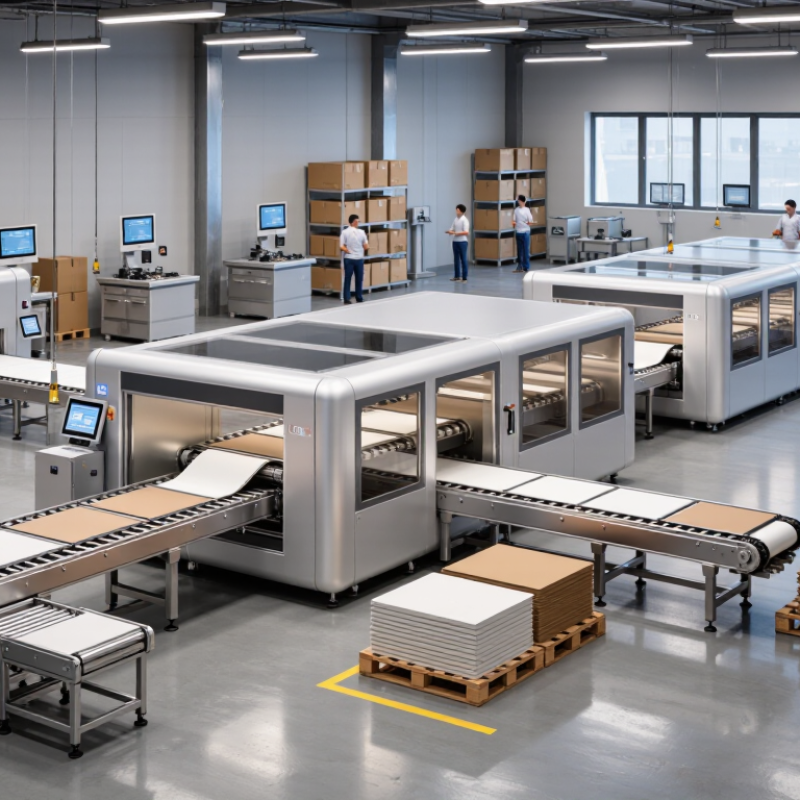
Die cutting shapes materials with a formed blade, creating repeatable pieces for packaging, labels, seals, and displays. The right machine depends on material thickness, order volume, shape complexity, and finishing needs. In production work, small setup decisions often affect waste more than expected. A few millimeters can change the result.
Flatbed die cutting uses a flat platen that presses a shaped die through the material. It suits thicker boards, foam, leather, and short or medium production runs. Operators can adjust pressure and registration carefully. Rotary die cutting uses a cylindrical die that turns continuously against the material. It supports faster roll-fed production and consistent output. Thin films, labels, tapes, and flexible packaging often benefit from this process. However, rotary tooling can require higher preparation costs.
Digital die cutting uses a computer-controlled blade instead of a fixed die. It handles prototypes, personalized orders, and changing designs with little tooling delay. Digital systems can cut intricate outlines, but blade wear and slower speeds may affect large runs. I have seen teams choose digital equipment too quickly, then struggle with thick stock and uneven edges. Testing several materials is essential. Do not trust the sample alone. Check dust, curl, registration, and edge quality after extended running. A practical choice weighs machine capability against daily workflow, operator skill, and realistic order forecasts.

Why Choose a Die Cutting Machine for Your Business?
Throughput can reveal whether a die cutting machine fits your production goals. Some systems advertise more than 10,000 sheets per hour, but that figure needs careful checking. It may reflect ideal stock, minimal waste, and continuous feeding. Real output changes with sheet size, material thickness, cutting complexity, and setup time. In production trials, I would record finished sheets, not just machine cycles. A counter can show speed, while the delivery pile shows the truth. My early estimates were too optimistic because I ignored short stops and tool changes.
Tips: Compare at least three systems using the same material and sheet size. Measure usable sheets per hour across a full shift. Note feeding pauses, waste removal, operator adjustments, and setup duration. Ask for test data under conditions close to your own work. Small differences become significant after thousands of sheets.
A machine producing 10,000 sheets per hour may reduce labor pressure and support larger orders. However, speed alone does not guarantee lower costs. A slower system with stable feeding and fewer stoppages can deliver more saleable work. Track hourly output, reject rates, energy use, and maintenance time together. Keep the records. They expose assumptions that sales figures can hide. A practical trial, rather than a brochure promise, gives the most reliable basis for investment.
Measure throughput by comparing typical rated output across common die-cutting system types. High-speed rotary systems can exceed 10,000 sheets per hour, helping businesses improve production capacity and reduce bottlenecks.
Representative rated-throughput benchmarks for commercial equipment. Actual output varies with sheet size, substrate, die complexity, stripping requirements, setup time, and machine configuration.
Precision should be measured before price. A ±0.1 mm registration accuracy is a practical benchmark for premium labels, cartons, and short-run packaging. It helps printed graphics meet scores, windows, and die-cut edges cleanly. A 0.3 mm shift can expose a white border or damage a barcode. Small errors become expensive during high-volume production.
The Smithers report, The Future of Global Printed Packaging to 2027, forecasts the printed packaging market will reach about US$551.3 billion by 2027. That growth increases pressure to reduce material waste and rework. In production trials, measure at least 30 sheets across the run. Check the first sheet, the middle, and the final sheet. Record registration on both axes.
A machine reaching ±0.1 mm in ideal conditions may perform differently with recycled board, humidity changes, or worn tooling. The testing method matters. Use the actual substrate, production speed, and artwork used by your business. Inspect registration with a calibrated vision system or digital microscope. Document repeatability, not only the best result.
PMMI’s reports on packaging machinery trends also highlight automation, changeover efficiency, and waste reduction as major investment drivers. These benefits matter when accurate cutting supports faster setup and fewer rejected sheets. Still, ±0.1 mm is a benchmark, not a guarantee. Ask suppliers for test data, tolerance ranges, and maintenance requirements before committing.
Choosing a die cutting machine should begin with numbers, not excitement. In a real production review, record material waste from ten recent jobs. Include scrap sheets, rejected parts, and trim removed during setup. Then compare those costs with the machine’s purchase, tooling, maintenance, and training expenses. A two-percent waste reduction may sound small. Across thousands of sheets, it can become substantial. Still, estimates can disappoint when operators change materials or rush inspections.
Setup time deserves equal attention. Measure the minutes between the last good run and the first approved piece. Record tooling changes, alignment adjustments, test cuts, and cleaning. Shorter setups increase available capacity, but only when quality remains stable.
Use OEE to connect availability, performance, and quality in one view. An 82% OEE may look healthy, yet hidden downtime can distort it. Check stoppage logs, speed losses, and rejected batches weekly. Numbers are useful, but imperfect.
Calculate monthly benefits from reduced waste, saved setup labor, extra output, and fewer rejects. Divide the total investment by that monthly benefit to estimate payback. For example, a 60,000-dollar investment with 6,000 dollars of monthly gains suggests ten months. That result is only a working model. Demand may fall, maintenance may rise, or savings may arrive later than planned. Add a conservative scenario before approving the purchase. Review actual results after ninety days. Revise the assumptions.
Why choose a die cutting machine for your business? Consistent cutting, folding, and creasing can reduce manual variation and improve production speed. However, machine selection should include compliance planning, not only output capacity.
ISO 12647-2 helps control printed color and appearance before sheets reach the die cutting stage. It supports measurable targets for density, tone value, proofing, and press conditions. A die cutting machine cannot correct poor color control. Use calibrated measurement tools, approved proofs, and documented substrate settings. Our early checks were too optimistic; small paper changes still affected registration and folding accuracy.
ANSI B11.19 focuses on safeguarding and risk reduction for machinery. Guards, emergency stops, safe access points, and documented procedures deserve practical testing. Tips: Check guard clearances, record inspection dates, and train operators with real production samples. Keep samples from each batch for traceability. Review near-misses, even when no injury occurred. A short checklist is useful, but it cannot replace a proper risk assessment. Independent technical review may also reveal gaps that internal teams overlook.
Get in Touch
570 Alden Road Unit #10, Markham Ontario Canada, L3R 8N5
Quick Links
Featured Products
Industries