How to Use US DDP Ocean Trucking for Global Sourcing?

Global sourcing increasingly depends on predictable ocean transport, not simply low factory prices. UNCTAD’s Review of Maritime Transport 2024 reports that more than 80% of global merchandise trade by volume moves by sea. That scale explains why ocean freight remains central to sourcing from Asia, Europe, and other production regions.

US DDP Ocean Trucking combines ocean freight, customs coordination, duty and tax handling, port drayage, and final delivery in the United States. This guide explains how the model works across each handoff. A typical shipment may move from a supplier’s warehouse into a 40-foot container, through a congested port, then by truck to a distribution center in Chicago or Los Angeles. The World Bank’s Logistics Performance Index 2023 emphasizes reliability, tracking, and timely delivery. Those details matter when inventory is waiting on a retail floor.

DDP can simplify purchasing, but it is not automatically the safest option. A cheap all-in quote may conceal storage fees, chassis charges, demurrage, insurance limits, or unclear tax responsibilities. The model also requires accurate product descriptions, commercial invoices, packing lists, and compliant customs procedures. Importers should confirm who acts as the responsible party and whether the arrangement fits applicable US customs and tax requirements. Professional customs brokers and qualified logistics advisers can help verify these points.

The numbers can mislead.

Real performance depends on lane, season, port, and supplier discipline. Careful sourcing teams compare landed cost, transit reliability, exception handling, and delivery evidence. They also challenge assumptions before signing. That uncomfortable step often prevents expensive surprises.
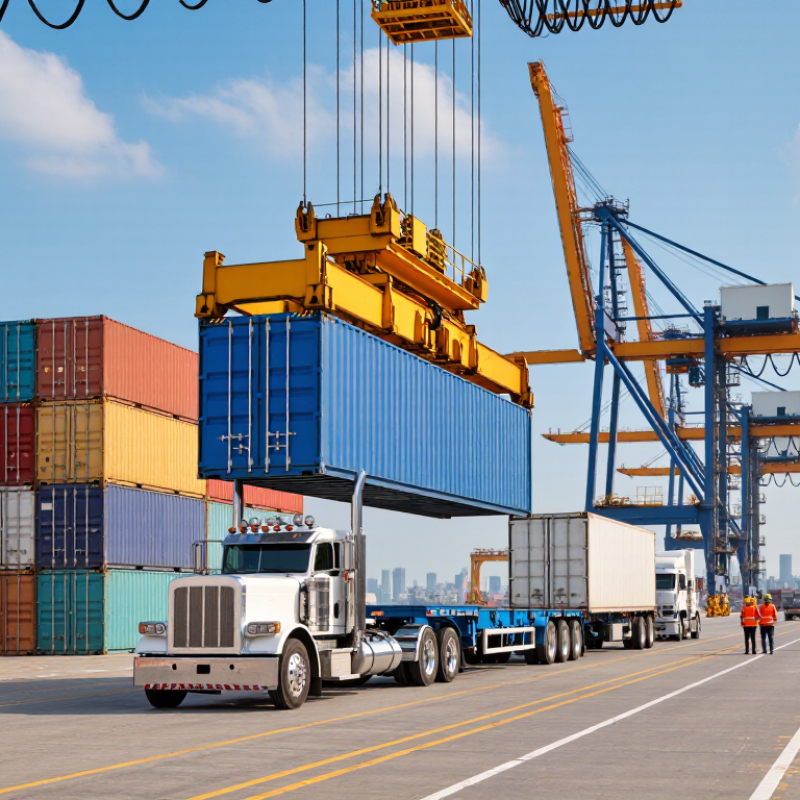
How to Use US DDP Ocean Trucking for Global Sourcing?

Define DDP Roles Under Incoterms® 2020 and 80%+ Sea Freight Trade

How to Use US DDP Ocean Trucking for Global Sourcing?

More than 80% of global merchandise trade by volume moves by sea, according to UNCTAD’s Review of Maritime Transport. That scale makes ocean freight practical for global sourcing, but DDP requires precise role allocation. Under Incoterms® 2020, the seller arranges export clearance, ocean transport, US import clearance, duties, taxes, and final trucking to the named destination. Risk remains with the seller until the goods arrive, ready for unloading. The buyer normally handles unloading unless the sales contract states otherwise.

The seller should coordinate the carrier, customs broker, drayage provider, and delivery appointment. The buyer should provide accurate product descriptions, delivery hours, receiving limits, and tax information. In the United States, customs procedures may still require a qualified importer of record. Therefore, DDP wording alone cannot replace a written compliance plan. The contract should identify who files entries, pays government charges, corrects document errors, and manages inspections.

A practical booking file includes the commercial invoice, packing list, bill of lading, tariff classification, and delivery address. The World Bank’s Logistics Performance Index 2023 links reliable customs and shipment tracking with stronger logistics performance. DDP can reduce surprise charges, but it may hide costs inside one landed price. That is convenient, not always transparent. Buyers should compare freight, duty, brokerage, storage, and trucking separately before approving the quote. Mistakes happen when “delivered” is treated as “unloaded and accepted.”

How to Use US DDP Ocean Trucking for Global Sourcing? - Define DDP Roles Under Incoterms® 2020 and 80%+ Sea Freight Trade

Scope: This table summarizes the practical allocation of responsibilities for a sea-freight shipment delivered under DDP (Delivered Duty Paid) to a named place in the United States. The exact obligations depend on the sales contract, the named place, customs requirements, and applicable law.
DDP Ocean and Trucking Responsibility Matrix — Incoterms® 2020
Supply-Chain Stage Seller / Exporter Responsibility Buyer / Importer Responsibility Risk Transfer Under DDP Typical Cost Allocation Operational Control Point
1. Product preparation Prepare goods, commercial invoice, packing list, marking, packaging, and any agreed product documents. Provide accurate specifications, delivery requirements, and information needed for import compliance. Risk remains with the seller. Seller normally includes preparation and export-related costs in the DDP price. Confirm the exact goods description, tariff classification, quantity, and packaging standard before booking.
2. Export clearance Complete export clearance and provide required export documents. Cooperate with information requests when necessary. Risk remains with the seller. Seller pays export formalities, duties, taxes, and charges where applicable. Check whether the exporter can legally complete the export procedure in the origin country.
3. Origin inland trucking Arrange and pay for pickup, origin drayage, container handling, and transport to the port or terminal. Provide loading instructions and ensure the cargo is ready at the agreed time. Risk remains with the seller. Seller normally bears origin trucking and agreed terminal charges. Define container type, pickup window, free time, and responsibility for loading or waiting charges.
4. Ocean export transport Book and pay for the ocean carriage from the origin port to the agreed destination port or place. Review routing, transit-time assumptions, and shipment documentation. Risk remains with the seller throughout the sea leg. Seller pays the contracted ocean freight and included origin or destination charges. Clarify whether the rate is port-to-port or includes destination handling and inland delivery.
5. Import arrival and customs entry Arrange import clearance, submit the entry, and provide required documentation through an eligible customs representative. Provide information about the intended use, permits, product standards, and any buyer-specific compliance requirements. Risk remains with the seller until delivery at the named place. Seller pays import clearance costs, subject to the contract and applicable customs rules. Confirm that the seller can act as, or appoint, the legally acceptable importer-side party.
6. Import duties and taxes Pay applicable import duties, customs charges, and import taxes required under the DDP arrangement. Pay only costs expressly excluded from the contract or caused by buyer-specific changes, delays, or inaccurate instructions. Risk remains with the seller. Seller includes import duty and tax exposure in the landed-cost quotation. Validate tariff classification, customs value, origin rules, tax treatment, and possible trade remedies before signing.
7. Destination port and inland trucking Arrange and pay for destination handling, release, drayage, and inland transport to the named delivery place. Provide an accessible delivery location and receiving appointment. Risk remains with the seller during destination trucking. Seller pays agreed destination transport and delivery charges. State the complete named place, delivery hours, equipment requirements, and whether the location is a terminal or final facility.
8. Final delivery Deliver the goods to the named place, ready for unloading. Accept delivery and arrange unloading unless the contract specifically assigns unloading to the seller. Risk transfers when the goods are placed at the buyer’s disposal at the named destination, ready for unloading. Seller pays delivery to the named place; unloading is generally the buyer’s cost and risk. Record proof of delivery, condition of goods, arrival time, and any visible shortage or damage.
9. Cargo insurance No automatic obligation to purchase cargo insurance under DDP; provide information needed for the buyer to obtain insurance when requested. Consider purchasing cargo insurance or require insurance terms in the sales contract. Insurance does not determine risk transfer; risk follows the DDP delivery point. Insurance cost is allocated according to the contract. Specify coverage, insured value, claims procedure, exclusions, and the party responsible for filing claims.
10. Demurrage, detention, and storage Bear charges caused by the seller’s failure to provide documents, clear goods, or arrange timely transport. Bear charges caused by late receiving instructions, inaccessible premises, or buyer-requested delays. Allocation follows the cause of the delay and the written contract. Not automatically determined by Incoterms® 2020; the quotation should state free-time and exception rules. Include a written responsibility matrix for customs holds, terminal storage, container detention, and appointment failures.
Global Sea-Freight Context and DDP Planning Indicators
Indicator Reference Value or Rule Practical Meaning for Global Sourcing Recommended Contract Check
Share of world trade moved by sea More than 80% of global merchandise trade by volume is transported by sea, according to widely cited UN maritime trade statistics. Ocean freight is a central option for high-volume sourcing, but it requires coordinated port, customs, and inland-trucking planning. Separate ocean freight, terminal handling, customs, and inland trucking inclusions in the landed-cost quotation.
DDP delivery point The seller delivers at the named destination with the goods cleared for import and ready for unloading. “DDP to the United States” is incomplete unless the exact terminal, warehouse, distribution center, or address is stated. Use a precise named place, delivery window, unloading arrangement, and proof-of-delivery requirement.
Seller’s maximum obligation Among the Incoterms® 2020 rules, DDP places the broadest transport, export, import, duty, tax, and delivery obligations on the seller. The seller needs reliable customs capability, accurate landed-cost modeling, and control of destination trucking. Confirm legal ability to handle import formalities and identify who will act in the importer-related process.
Unloading responsibility Under DDP, the seller generally delivers ready for unloading; unloading is not automatically the seller’s responsibility. A delivery truck may arrive at the site while unloading equipment and labor remain the buyer’s responsibility. State who provides a dock, forklift, labor, chassis, appointment, and unloading service.
Cost transparency Incoterms® 2020 allocates responsibilities and costs but does not create a fixed freight rate or guarantee a tax result. A low DDP quote may exclude destination fees, customs exceptions, unloading, or delay-related charges. Request a line-item landed-cost breakdown and define excluded charges, validity period, and adjustment triggers.
Reference note: Responsibility descriptions are based on the ICC Incoterms® 2020 framework. The sea-trade statistic is an approximate global indicator commonly reported in United Nations maritime transport publications; the percentage varies by year, methodology, and whether trade is measured by volume or value.

Calculate Landed Cost with 0.125% HMF, 0.3464% MPF, Duty, and Trucking

US DDP ocean trucking can simplify global sourcing, but the delivery quote is not the true landed cost. A reliable estimate should show customs value, ocean freight, insurance, duty, port charges, and inland trucking. Keep every input visible. This makes unexpected charges easier to investigate.

For applicable ocean cargo, calculate the Harbor Maintenance Fee at 0.125% of the relevant cargo value. The Merchandise Processing Fee is commonly 0.3464% of the customs value, subject to current minimum and maximum limits. Duty depends on the correct Harmonized Tariff Schedule classification and product origin. For example, a $50,000 customs value produces $62.50 in HMF and $173.20 in MPF before adjustments. Duty might add much more. Check the latest official customs rules.

DDP pricing should also identify the trucking scope clearly. Confirm whether it includes chassis fees, terminal handling, appointment charges, storage, and fuel adjustments. A port-to-warehouse rate can look attractive while excluding demurrage or overweight charges. The first estimate is rarely perfect. Product descriptions may be incomplete, and a classification assumption can change the duty rate. Ask for the customs entry value, fee formulas, and delivery conditions in writing. Compare the final entry statement with the original quotation, then revise future sourcing budgets using actual trucking and clearance data.

US DDP Ocean Trucking: Landed Cost Breakdown

Illustrative shipment scenario using a customs value of $100,000, a 5% duty assumption, the statutory 0.125% Harbor Maintenance Fee (HMF), and the 0.3464% Merchandise Processing Fee (MPF).

Estimated total landed cost: $108,596.40. Duty depends on the product’s HTS classification, while ocean freight and destination trucking vary by lane, shipment size, fuel costs, and delivery location. The figures shown are for planning purposes and are not a carrier or customs quotation.

Prepare US Import Data: File ISF at Least 24 Hours Before Vessel Loading

How to Use US DDP Ocean Trucking for Global Sourcing?

Prepare US Import Data: File ISF at Least 24 Hours Before Vessel Loading

DDP ocean trucking does not remove the need for accurate US import preparation. The Importer Security Filing, commonly called ISF or “10+2,” must reach U.S. Customs and Border Protection at least 24 hours before cargo is loaded onto the vessel. This deadline applies at the foreign port, not when the ship reaches the United States.

Small errors can become expensive. CBP may issue a liquidated damages claim of up to $5,000 for each ISF violation. The filing usually requires details such as the seller, buyer, manufacturer, container stuffing location, and consolidator. Confirm these details before booking. A licensed customs professional should review unclear ownership or consignee information, because DDP contract terms do not automatically transfer every regulatory responsibility.

Timing matters more during busy seasons. UNCTAD’s Review of Maritime Transport reports that ships carry over 80% of global merchandise trade by volume. One missing factory address can delay loading instructions, inland trucking, or customs review. Keep a shared data sheet with version dates, container numbers, and contact names. That simple habit helps.

Still, real shipments are rarely perfect. Suppliers may change packing sites late. Container details may arrive after the planned filing window. Do not guess. Request corrections quickly and record who approved each amendment. This extra discipline feels slow, but an incomplete ISF can cost more than a careful pre-shipment check.

Coordinate Ocean Booking, Port Handling, and Final-Mile Container Trucking

How to Use US DDP Ocean Trucking for Global Sourcing?

DDP ocean trucking works best when booking, port handling, and final-mile delivery share one operating plan. More than 80% of global trade volume moves by sea, according to UNCTAD’s Review of Maritime Transport 2024. Yet the ocean leg is only one part of the delivery chain. A booking needs the correct container type, cargo details, verified gross mass, and realistic cutoff time. At the US port, teams must coordinate customs clearance, terminal release, chassis availability, and free-time limits. A missed appointment can turn a planned delivery into storage and demurrage costs.

Final-mile container trucking requires equal attention. Confirm the delivery address, receiving hours, road restrictions, and whether the site can unload a full container. The World Bank’s Logistics Performance Index 2023 highlights customs, infrastructure, and timeliness as major logistics factors. These areas often decide whether DDP feels smooth or expensive. The buyer should also confirm who acts as importer of record and who manages duties, taxes, and entry documents. Responsibilities must be written clearly. Verbal assumptions fail.

Tips: Request a milestone schedule from booking to empty-container return. Compare free time, port charges, chassis fees, and truck waiting rules, not only the ocean rate. Keep a backup delivery date. Perfect forecasts do not exist. A small buffer can protect the whole shipment.

Verify Delivery: DDP Seller Risk Ends at the Named Destination Place

How to Use US DDP Ocean Trucking for Global Sourcing?

US DDP ocean trucking can simplify global sourcing when the seller manages transport, import clearance, duties, and final delivery. However, the named destination place controls the risk boundary. It must be written precisely in the sales contract. “Buyer’s warehouse” is weaker than a complete street address, receiving dock, and delivery appointment requirement.

The seller’s risk normally ends when the goods arrive at that named place, ready for unloading. It does not automatically end when the container reaches a US port. Ocean arrival, customs processing, drayage, and inland trucking may still remain the seller’s responsibility.

A sourcing manager should verify the delivery record, not just the vessel arrival notice. Check the container number, seal condition, delivery time, driver documents, and signed proof of delivery. Photograph visible damage before unloading begins.

The handoff can become unclear when a warehouse refuses a late truck or lacks unloading equipment. That detail deserves attention before shipment. The contract should state who books the appointment, who unloads the cargo, and how delays are reported.

I have found that small wording gaps create larger disputes than freight delays.

Even a signed delivery receipt may not prove that every carton arrived undamaged. Count cartons against the packing list, record shortages immediately, and preserve inspection evidence. DDP reduces operational work, but it does not remove the buyer’s need for careful verification.

Scroll to Top