Choosing the right Sewer Cleaning Equipment affects flow restoration, worker safety, maintenance costs, and service response time. A municipal crew may face grease-packed kitchen lines, root intrusion, or sediment beneath a busy road. Each blockage demands a different combination of pressure, reach, water volume, and debris control. A compact electric machine can suit indoor drains, while a truck-mounted jetter handles longer, heavier lines. Small choices matter. Hose diameter, nozzle design, reel capacity, and vacuum strength can change daily productivity. This guide examines ten equipment types through a buyer’s practical lens, not through impressive specifications alone. Good equipment must match pipe size, access conditions, cleaning frequency, and available operator training.
The discussion draws on common field practices used by contractors, utilities, facility teams, and inspection specialists. It considers how machines perform around manholes, narrow alleys, wet surfaces, and unpredictable deposits. Operating costs receive equal attention, including fuel use, water demand, maintenance intervals, replacement parts, and downtime. Safety remains central. Reliable purchasing decisions should account for guarding, hose handling, pressure control, noise, and emergency procedures. No machine solves every problem. That limitation is easy to overlook when product brochures emphasize power. Readers will find clear comparisons, realistic use cases, and questions worth asking suppliers before placing an order. Some recommendations may require adjustment after site testing, because local conditions rarely behave perfectly. That honest uncertainty is useful. It encourages buyers to verify performance with their own pipe network, crew skills, and service demands.
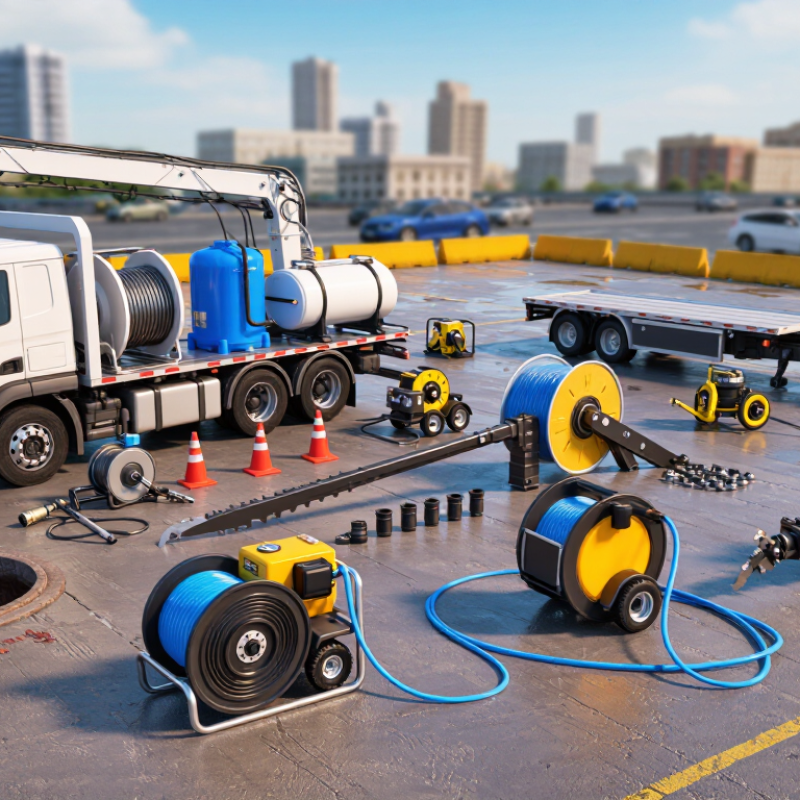
Sewer cleaning equipment works by breaking deposits loose, moving debris, or showing crews where problems begin. The main options include high-pressure sewer jetters, combination jet-vac trucks, vacuum excavators, drum machines, sectional cable machines, hydraulic winches, robotic cutters, CCTV inspection units, pipe locators, and flushing tankers. Jetters direct water through specialized nozzles, while vacuum systems lift sludge into a holding tank. Cable machines physically push or pull cutting heads through restricted lines.
Pressure is only half. A buyer should match water flow, nozzle design, suction capacity, hose length, and pipe diameter to actual site conditions. Grease needs different cleaning action than roots or compacted silt. CCTV equipment adds evidence before and after cleaning, reducing guesswork. Field crews often discover that a powerful machine performs poorly when access points are narrow or disposal capacity is limited. That detail is easy to overlook.
The U.S. Environmental Protection Agency’s 2022 Clean Watersheds Needs Survey identified about 630.1 billion dollars in documented clean-water infrastructure needs through 2041. This figure reflects aging collection systems and continuing maintenance pressure. Buyers should therefore assess uptime, operator safety, water recovery, noise, maintenance access, and local disposal requirements. The Water Environment Federation also emphasizes planned inspection and preventive maintenance in collection-system practice. Yet preventive schedules are not perfect. Rainfall, root growth, and unexpected inflows can quickly change equipment needs. A smaller jetter may suit routine work, while combination equipment can justify its cost on heavy-duty routes.

How sewer cleaning equipment works and what buyers should know
The chart shows representative pipe-diameter operating ranges in millimeters. High-pressure jetters use pressurized water to remove grease, sediment, and blockages; mechanical machines use rods, buckets, cutters, or chains; vacuum units remove loosened debris; and inspection cameras help verify cleaning results. Actual capability depends on nozzle selection, cable or hose length, pump flow, access conditions, pipe material, and local operating requirements.
High-pressure water jetters remove grease, sand, and soft blockages with focused water flow. Electric drain snakes handle short lines and common household obstructions. Sectional cable machines use detachable cable sections for indoor or small commercial work. Continuous cable machines carry longer cables and suit repeated maintenance on larger drains. Rodder machines push flexible rods through stubborn deposits, especially in long, straight pipelines.
Vacuum loaders lift sludge, gravel, and standing water into a sealed tank. Combination jet-vac units combine water jetting and vacuum recovery, making them practical for municipal crews. Bucket machines remove heavy sediment from large sewer sections using a powered bucket system. Hydraulic root cutters break invasive roots without requiring full pipe excavation. Chain flail cutters use rotating chains to clear scale, hardened deposits, and some mineral buildup.
Selection depends on pipe diameter, access, blockage type, and disposal capacity. I have seen crews choose powerful jetting equipment for narrow, fragile pipes. That assumption can damage old connections. Water pressure must match pipe condition. Operators should inspect hoses, cables, cutting heads, and tank seals before every shift. Wet-weather work also changes traction and recovery needs. No machine fits every line. A compact cable unit may outperform a large truck in a crowded service alley. Equipment records, operator training, and measured flow rates provide stronger buying evidence than appearance alone. Some field judgments remain imperfect, so post-cleaning inspection should challenge the original choice.
High-pressure water jetters use adjustable nozzles to remove grease, silt, and hardened deposits. They suit municipal lines, commercial drains, and regular maintenance work.
Sewer rod machines push linked rods through long, straight pipelines. Their rigid action helps break heavy blockages, but operators need careful control.
Electric drain augers use rotating cables for indoor drains and smaller service pipes. They are compact and practical around buildings.
Sectional cable machines offer longer reach through interchangeable cable sections. They work well on difficult bends and medium-sized pipes.
Drum cable machines store the cable inside a protective housing. This design reduces splashing, although cleaning the drum can be overlooked.
Vacuum sewer units remove sludge, water, and loose debris after jetting. Their strong suction supports deep manholes and flooded work areas.
Combination jet-vac trucks combine high-pressure cleaning with vacuum recovery. They save setup time on large networks, but their operating costs need review.
Root-cutting machines use rotating blades to clear invasive roots. They require accurate pipe assessment before use.
Robotic cutters trim concrete, scale, and intruding connections from inside pipelines. Remote operation improves access and reduces worker exposure.
Pipe inspection cameras provide lighting, recording, and distance measurements. They help confirm blockages before expensive cleaning begins.
From field experience, matching pressure and nozzle shape matters more than raw power. Fit matters. Buyers should compare pipe diameter, access limits, water supply, noise, maintenance, and operator training. I have seen suitable equipment fail because these details were checked too late.
Top 10 Types of Sewer Cleaning Equipment for Buyers
How to Compare Sewer Cleaning Equipment for Different Jobs
Choosing sewer cleaning equipment starts with the pipe, not the machine. Measure pipe diameter, access width, blockage depth, and available water. A compact sectional cable machine suits indoor drains and tight service rooms. A drum machine offers longer reach, but its heavier cable needs careful handling. For grease, roots, or hardened deposits, a high-pressure water jetter often cleans more completely. Water pressure matters, but flow rate controls how much debris leaves the pipe.
Job conditions can change the best choice. A vacuum unit helps remove sludge, standing water, and loosened material from deep chambers. A combination unit can handle larger municipal lines, although it requires more space and trained operators. Inspection cameras reveal cracks, displaced joints, and recurring blockages before cleaning begins. That evidence prevents guesswork. Short jobs.
Compare equipment by performance, transport, maintenance, and operator safety. Check hose length, cable flexibility, nozzle selection, recovery capacity, and noise levels. Ask whether the machine can work near traffic, homes, or narrow alleys. In my experience, buyers often focus on maximum pressure and overlook water supply limits. I have made that mistake myself. A powerful machine becomes inefficient when setup takes longer than cleaning. Test controls, emergency stops, filters, and drainage points before purchase. Keep service records, because neglected pumps and worn cables can distort any equipment comparison.
Buying sewer cleaning equipment is a safety decision, not only a productivity decision. The common ten include vacuum trucks, jetters, combination cleaners, drum machines, sectional machines, rodders, robotic cutters, pumps, cameras, and gas monitors. Match nozzle pressure, hose diameter, suction capacity, and access size to the pipe record. Do not trust a catalog rating alone. Field crews should test emergency stops, hose restraints, reverse alarms, lighting, and camera seals before deployment. OSHA’s permit-required confined-space rule requires hazard evaluation, atmospheric testing, attendants, communication, and rescue planning where applicable. That changes purchasing priorities. An integrated gas monitor may matter more than extra jetting power.
The U.S. Environmental Protection Agency’s 2022 Clean Watersheds Needs Survey documented about 630.1 billion dollars in national clean-water infrastructure needs. This scale suggests long equipment lives, but buyers should budget for maintenance, training, and replacement parts. The Bureau of Labor Statistics recorded 5,283 fatal work injuries across the United States in 2023. That figure is not sewer-specific, yet it reinforces a hard lesson: routine work still needs disciplined controls. Inspect hose wear, couplings, vacuum filters, pump seals, batteries, and lifting points on a written schedule. Keep service records. Ask suppliers for measured flow data, noise levels, inspection intervals, operator training, and rescue-compatible features. Some purchasing teams overvalue maximum pressure and undervalue ergonomics. The checklist is never perfect. Our assumptions can be wrong.
Get in Touch
570 Alden Road Unit #10, Markham Ontario Canada, L3R 8N5
Quick Links
Featured Products
Industries