Choosing the top pneumatic actuator manufacturers worldwide requires more than counting factories or repeating market slogans. Buyers need evidence from real applications, technical documentation, and service records. A compact cylinder on a packaging line faces different demands from a heavy-duty actuator used in mining, water treatment, or process control.
Dr. Peter Post, a respected pneumatic technology specialist associated with Festo, once observed, “Pneumatics is a very old technology, but it is not an outdated technology.” That view remains relevant. Modern manufacturers are improving sealing systems, sensor integration, energy monitoring, corrosion resistance, and predictive maintenance. These details matter when an actuator cycles thousands of times beside a dusty conveyor.
This guide examines leading companies by product range, engineering capability, global support, reliability, and application experience. It considers established names such as Festo, SMC, Emerson, Parker Hannifin, Norgren, and Airtac, while recognizing strong regional specialists. No single manufacturer wins every category. That is the uncomfortable truth.
A reliable comparison should ask practical questions. Can the supplier provide accurate sizing support? Are replacement seals available locally? Does the actuator meet the required pressure, temperature, and mounting conditions? How clearly does the company publish test data and maintenance guidance?
Some rankings may change by industry or region. Pricing alone can mislead. A cheaper pneumatic actuator may consume more air or require earlier replacement. This overview therefore focuses on measurable value, not promotional claims. The conclusions remain open to revision because product portfolios, certifications, and customer needs continue to evolve.
Pneumatic actuators convert compressed-air energy into mechanical motion. A piston, vane, or diaphragm moves inside a sealed housing. That movement turns a valve stem or drives a linear mechanism. The textbook explanation is neat. Real systems are less tidy.
A control signal opens a directional valve. Compressed air enters one chamber, while exhaust air leaves another. The pressure difference creates force. In rotary actuators, a rack-and-pinion or vane converts force into rotation.
Double-acting designs use air in both directions. Spring-return designs use air one way and spring force the other. Filtration, pressure regulation, and lubrication affect response and service life. Moisture is the quiet troublemaker.
The International Federation of Robotics reported 4.28 million industrial robots operating worldwide in 2023. This figure reflects the scale of automated motion systems. Pneumatic actuators remain valuable where fast cycling, simple control, and clean operation matter. A 2024 MarketsandMarkets report estimated the pneumatic actuator market at about USD 2.1 billion in 2023. It projected growth toward USD 2.7 billion by 2028. Report boundaries differ, so these numbers need careful reading. During selection, engineers should verify load, stroke, cycle rate, air quality, and failure position. A smaller actuator is not always the economical choice.
Choosing pneumatic actuator manufacturers requires more than comparing prices or glossy catalogs. In field evaluations, I inspect repeatability, response time, seal quality, and documented cycle testing. A reliable manufacturer explains how each rating was measured. Ask for test conditions, tolerances, and inspection records. A polished catalog is not proof. Look for traceable materials, consistent machining, and clear warranty terms. Experienced engineers should match actuators to valve torque, air quality, temperature, and duty cycle. They should also discuss failure modes without hiding uncomfortable details.
Technical authority appears in practical evidence. Request sample drawings, installation guidance, maintenance intervals, and performance data at realistic pressures. Check relevant certifications for your application and market. Speak with existing users about delivery accuracy and technical support. One missed dimension can delay an entire production line. I have sometimes valued responsive problem-solving over the lowest quotation. That judgment is not perfect, but repeated communication often reveals manufacturing discipline. Confirm spare-part availability before approving a long-term specification.
Tips: Compare at least three manufacturers using the same checklist. Ask each supplier to explain a failed test and its corrective action. Review sample reports, not only promises. Test a small batch before full deployment. Record ambient temperature, supply pressure, load, and switching frequency. Recheck the results after installation. That final step is easy to skip.
This neutral scorecard shows practical evaluation weights for comparing pneumatic actuator manufacturers. Product reliability, standards compliance, technical performance, lifecycle support, customization, delivery capability, and total cost should be assessed using documented test results, certifications, drawings, warranty terms, and service records rather than brand visibility alone.
Pneumatic actuator manufacturers vary by region because industries demand different pressure ranges, materials, and control standards. European producers often focus on compact designs, corrosion resistance, and precise motion for factory automation. Their engineering teams commonly test actuators through repeated cycle trials, not only laboratory measurements. Buyers should still verify local service capacity. A polished datasheet cannot replace nearby technical support.
North American manufacturers frequently develop heavy-duty actuators for energy equipment, packaging lines, and process plants. Their products often emphasize easy maintenance, modular valves, and clear replacement procedures. In Asia-Pacific, large manufacturing centers support high-volume production and competitive lead times. Many suppliers now improve sealing systems and digital monitoring options. Quality can differ between factories, even within the same region. That detail deserves attention.
Manufacturers serving the Middle East, Africa, and Latin America often adapt actuators for dust, heat, humidity, and unstable operating conditions. Stainless components and protected surface finishes may extend service life in harsh locations. Experienced buyers inspect pressure ratings, operating temperature, spare-part access, and regional compliance documents. Field measurements matter. A small mismatch in mounting dimensions can delay an entire production line. Regional expertise helps, but no supplier gets every application right. Engineers should question assumptions, request test records, and compare actual operating data with published performance figures.
Top Pneumatic Actuator Manufacturers Worldwide?
Leading pneumatic actuator manufacturers compete through product reliability, response speed, and application-specific engineering. Their product ranges usually include rack-and-pinion actuators, Scotch-yoke designs, rotary vane units, and compact linear cylinders. These products serve quarter-turn valves, dampers, packaging lines, and robotic handling systems. Reliable suppliers publish torque charts, cycle ratings, mounting dimensions, and material specifications. That documentation helps engineers select equipment without guessing.
Modern actuators often combine aluminum or stainless-steel bodies with low-friction seals and corrosion-resistant coatings. Integrated position sensors can report open, closed, or intermediate movement. Smart valve controllers also support remote diagnostics and predictive maintenance. In a food-processing room, smooth surfaces and washdown resistance matter. In a chemical plant, seal compatibility and enclosure protection become more important. IP ratings should match the actual environment, not the sales brochure.
Maintenance teams frequently discover that incorrect sizing causes more failures than poor manufacturing. An oversized actuator may waste compressed air and move harshly. An undersized unit may stall during pressure drops. No actuator is perfect. Temperature, moisture, air quality, and installation alignment can change performance. A careful supplier should provide test evidence, service guidance, and replacement-part access. Even then, engineers should verify cycle demands on site. That step is often skipped.
| Actuator Product Category | Operating Principle | Typical Bore or Size Range | Typical Stroke or Rotation Range | Common Technologies | Key Performance Characteristics | Typical Industry Applications | Relevant Standards or Design References |
|---|---|---|---|---|---|---|---|
| Tie-Rod Cylinders | Compressed air drives a piston and rod in a linear direction. External tie rods hold the end caps and cylinder tube together. | Approximately 32–125 mm bore for common industrial models. | Approximately 25–2,000 mm stroke, depending on bore, load, and stability requirements. | Adjustable cushioning, magnetic piston sensing, polyurethane or nitrile seals, corrosion-resistant rods, and repairable construction. | Suitable for repetitive pushing, pulling, clamping, lifting, and positioning. Large bore sizes provide high force at moderate air pressure. | Material handling, packaging machinery, metal processing, assembly lines, and general factory automation. | ISO 15552 is commonly used as a dimensional reference for several industrial cylinder designs. |
| Profile and Round Cylinders | A piston converts pneumatic pressure into linear motion inside either an extruded profile tube or a compact round tube. | Profile designs commonly range from about 32–100 mm bore; round designs often range from about 8–63 mm bore. | Typically 10–1,000 mm, with shorter strokes common in compact machines. | Integrated grooves for sensors, compact end caps, threaded mounting options, and low-friction sealing systems. | Good balance of size, cost, and performance. Round cylinders are especially useful where installation space and cleanliness are important. | Small automation equipment, food and beverage machinery, laboratory equipment, printing, and light-duty assembly. | ISO 6432 is a common dimensional reference for many small round-cylinder formats. |
| Compact Cylinders | A short-body pneumatic cylinder generates linear force while minimizing overall installation length. | Approximately 12–100 mm bore in widely used compact formats. | Approximately 5–300 mm stroke. | Short overall body, integrated magnetic sensing, guided options, low-friction seals, and multiple mounting configurations. | Space-efficient and lightweight. Best suited to short strokes and moderate loads rather than long-stroke applications. | Pick-and-place systems, clamping, ejecting, indexing, semiconductor equipment, and compact packaging machinery. | Many designs follow ISO 21287 or manufacturer-specific compact-cylinder dimensions. |
| Rodless Cylinders | A piston moves inside a sealed cylinder and transfers motion to an external carriage through a magnetic coupling or mechanical sealing arrangement. | Approximately 16–100 mm bore for common industrial configurations. | Approximately 100–6,000 mm stroke, depending on load, speed, and cylinder design. | Magnetic coupling, mechanically sealed carriage, external guides, shock absorbers, and position sensors. | Provides long travel with less extended length than a conventional rod cylinder. External guiding is often required for significant moments or side loads. | Transfer systems, door and gate movement, packaging, textile machinery, and long-travel handling equipment. | Performance is generally defined by the product design; mounting and dimensional requirements may be based on ISO 6431-related formats or supplier specifications. |
| Guided Cylinders | A pneumatic piston is combined with guide rods, guide rails, or a guided carriage to resist rotation and side loads. | Approximately 12–100 mm bore, with guide size selected according to load and moment capacity. | Approximately 10–500 mm stroke. | Dual guide rods, ball-bearing or plain-bearing guides, anti-rotation features, adjustable end cushioning, and integrated sensors. | Improved repeatability and load stability compared with an unguided cylinder. The allowable moment depends strongly on guide spacing and bearing type. | Clamping, pressing, palletizing, assembly, loading and unloading, and machine-tool automation. | Usually specified by the actuator manufacturer because guide geometry, bearing ratings, and allowable moments vary by design. |
| Rotary Vane Actuators | Compressed air acts on a vane inside a chamber to produce limited-angle rotary motion. | Common torque classes range from below 1 N·m to more than 100 N·m, depending on pressure and size. | Typical rotation angles include 90°, 180°, and adjustable ranges up to approximately 270°. | Adjustable rotation stops, cushioning, position sensing, corrosion-resistant housings, and compact vane construction. | Compact and lightweight for limited-angle rotation. Torque can be affected by friction, pressure, acceleration, and external loads. | Valve actuation, diverters, gripping systems, indexing, material orientation, and packaging machinery. | Torque, rotation angle, mounting, and interface dimensions are normally defined by the specific product design. |
| Rack-and-Pinion Rotary Actuators | Two pistons or a single piston drive a rack, which turns a pinion to create rotary output. | Common torque ratings range from approximately 1–4,000 N·m across industrial size classes. | Usually 90° or 180°, with adjustable end positions on many designs. | Double-rack construction, adjustable stops, integrated cushioning, NAMUR-style interfaces, and position feedback. | Higher torque capacity and better suitability for valve automation than many compact vane designs. Output torque varies with supply pressure and angle. | Quarter-turn valves, process control, water treatment, chemical processing, energy facilities, and bulk handling. | Valve actuator interfaces are frequently associated with ISO 5211 mounting dimensions and VDI/VDE 3845 accessory interfaces. |
| Air Preparation and Control Packages | Filters remove particulate and condensed water, regulators control pressure, and directional valves manage actuator movement. | Common port sizes range from approximately 1/8 to 1 inch for factory automation; larger process systems use larger connections. | Not applicable; response time and flow capacity are the primary sizing factors. | Coalescing filtration, proportional pressure control, soft-start valves, flow controls, electronic monitoring, and fieldbus communication. | Correct air preparation improves seal life, repeatability, and valve reliability. Pressure and flow must be matched to the actuator load and speed. | All pneumatic automation sectors, including packaging, automotive production, food processing, and process equipment. | ISO 8573-1 is widely used to classify compressed-air purity by particles, water, and oil. |
| Smart Pneumatic Actuation Systems | Conventional pneumatic motion is combined with sensors, electronic valve control, and software-based monitoring. | Available across multiple cylinder and rotary-actuator sizes; system capacity depends on the connected actuator and valve. | Stroke and rotation are determined by the mechanical actuator; electronic response is commonly measured in milliseconds. | Position sensing, pressure sensing, IO-Link or industrial network communication, predictive-maintenance alarms, and energy monitoring. | Provides condition data, cycle counting, fault detection, and improved diagnostic visibility. It does not eliminate the need for correct mechanical sizing. | Connected factories, high-speed packaging, automotive assembly, pharmaceutical equipment, and machine monitoring. | Electrical and communication architecture may use IEC 61131-9 for IO-Link and applicable industrial network specifications. |
| Cleanroom and Hygienic Actuators | Linear or rotary pneumatic motion is delivered through materials, seals, and surface finishes selected for contamination control. | Common bore sizes range from approximately 16–100 mm, with application-specific larger designs available. | Typically 10–1,000 mm linear stroke or 90°–180° rotary movement. | Stainless-steel construction, smooth surfaces, washdown-resistant seals, low-particle designs, and food-grade lubricants where required. | Designed to reduce contamination risk and withstand frequent cleaning. Chemical compatibility and washdown pressure must be checked for each application. | Pharmaceutical manufacturing, medical devices, dairy processing, beverage filling, and food packaging. | Applications may reference ISO 14644 cleanroom requirements and EHEDG or 3-A hygienic design guidance where applicable. |
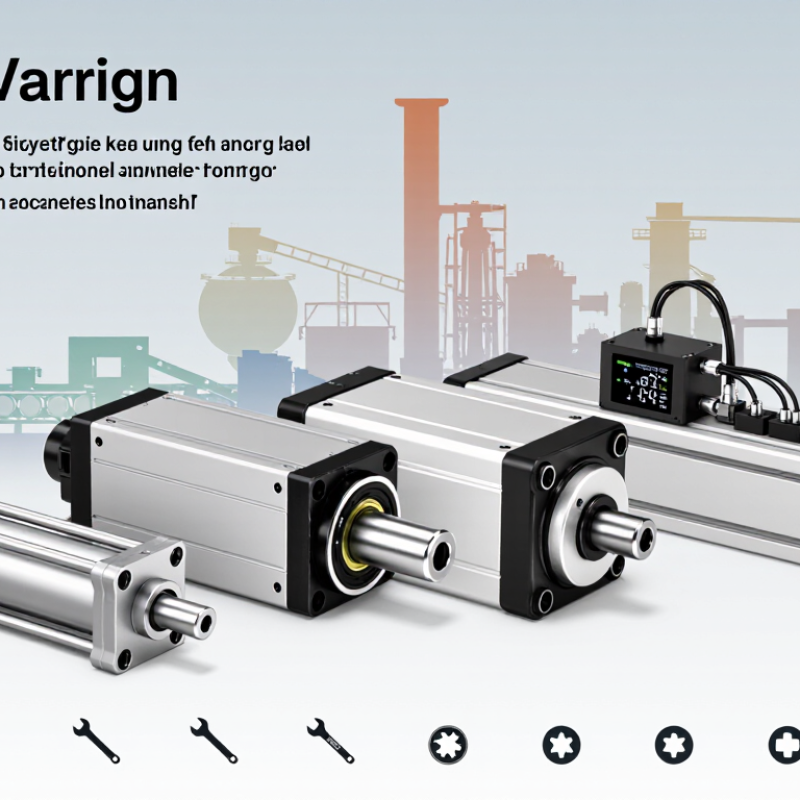
Note: The figures shown are representative industry ranges rather than specifications for any individual manufacturer. Actual force, speed, torque, cycle life, environmental resistance, and service requirements depend on actuator size, supply pressure, load conditions, installation orientation, air quality, and duty cycle.
Choosing a global pneumatic actuator manufacturer requires more than comparing catalog prices. Match the actuator to torque, pressure, temperature, cycling speed, and installation space. Ask for performance curves, material specifications, and testing records. A reliable supplier should explain limitations clearly, not hide behind broad claims.
Inspect quality controls before signing a contract. Review machining tolerances, seal selection, corrosion protection, and final inspection procedures. Request sample units and test them under real operating conditions. Test the details. Check whether production follows recognized industrial standards and whether each batch remains traceable. Factory audits, calibration records, and documented corrective actions reveal more than polished presentations.
Global supply adds another layer of risk. Confirm lead times, spare-part availability, technical support, packaging quality, and communication across time zones. Evaluate the manufacturer’s experience with similar environments, especially dust, moisture, vibration, or frequent cycling. Total cost includes maintenance and downtime, not only the purchase price. I have seen buyers accept a cheap actuator, then struggle with seals and delayed replacements. That mistake is easy to repeat. No checklist is perfect. Revisit your criteria after pilot testing, and leave room for evidence to challenge your first choice.
Get in Touch
570 Alden Road Unit #10, Markham Ontario Canada, L3R 8N5
Quick Links
Featured Products
Industries