Choosing the right Industrial Defoamer is not a simple matter of selecting the product with the strongest label claim. Foam behaves differently in wastewater tanks, coatings, adhesives, pulp systems, and chemical reactors. Temperature, pH, shear, surfactant concentration, and contact time can change performance within minutes.
P. R. Garrett, a recognized authority on foam control, wrote, “Foam is a dispersion of gas in a liquid.” This concise definition explains why foam control requires more than a quick chemical fix. An effective Industrial Defoamer must reach the foam interface, destabilize the liquid film, and remain compatible with the finished process. A silicone-based defoamer may work well in a high-shear process, while a mineral-oil or polyether product may better suit another formulation. Testing matters.
A practical evaluation should begin with a representative sample, not a supplier brochure. Observe foam height, collapse speed, surface defects, and re-foaming after mixing. Check the smallest workable dosage. Too much defoamer can create craters, fisheyes, deposits, or coating defects. That mistake is common.
The choice also depends on production priorities. A food-contact process demands documented compliance and careful migration review. A wastewater operation may prioritize rapid knockdown and low environmental persistence. These goals can conflict. There is no universal best product.
This guide examines how to compare chemistry, dosage, compatibility, safety documentation, and total operating cost. It also recognizes an uncomfortable reality: laboratory results may not predict full-scale behavior perfectly. Good decisions require disciplined trials, process knowledge, and honest review of failures.
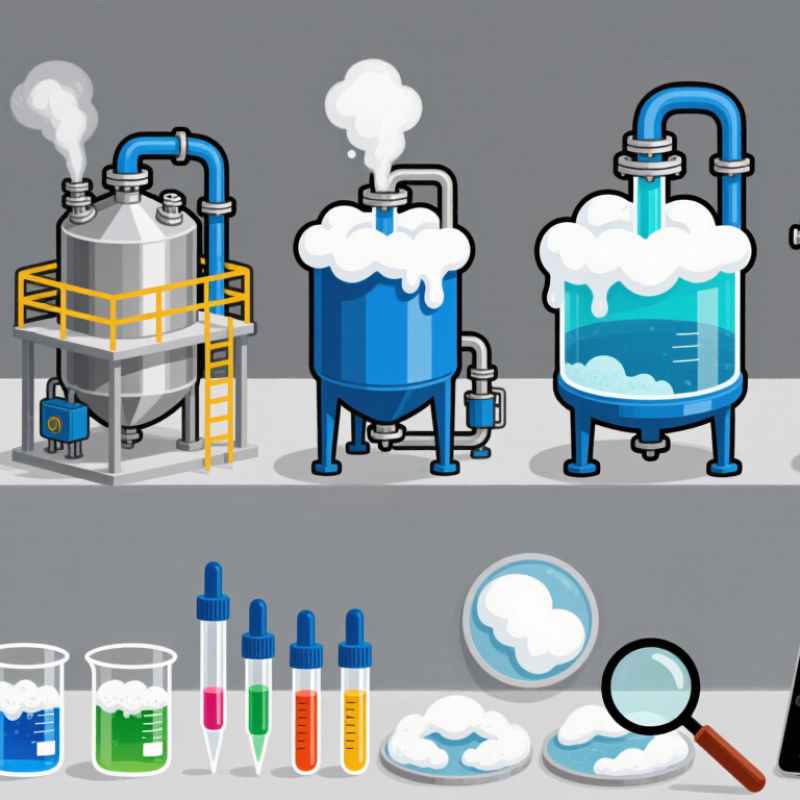
Industrial defoamers control unwanted foam during mixing, pumping, filling, and filtration. Foam traps air, reduces tank capacity, and can disturb coating or cleaning performance. A suitable defoamer breaks bubbles quickly and prevents new foam from forming. Its function depends on formulation, temperature, shear, and contact time.
In practical trials, I check the process before choosing chemistry. Silicone-based defoamers can act rapidly at low dosage, while mineral-oil or polymer-based options may offer different compatibility. The best choice must disperse evenly without causing surface defects, deposits, or filtration problems. A small laboratory test helps, but it can mislead. Factory shear and temperature often change the result. I have seen a product perform well in a beaker, then lose control in a high-speed production line.
Tips: Test several dosages, not only one. Match the defoamer to pH, solids, temperature, and mixing speed. Observe foam after five minutes and again after one hour. Check gloss, adhesion, filter pressure, and final appearance. Keep accurate records. A lower dosage is not always better. It may reduce cost, but unstable foam can create greater waste. Discuss results with operators and quality staff, because visible foam is only part of the problem.

How to Choose the Right Industrial Defoamer?
Identifying Foam Sources and Process Requirements
Choosing an industrial defoamer starts with finding where the foam originates. Foam may come from surfactants, proteins, polymers, air leaks, or excessive mechanical mixing. These causes often appear similar inside a tank. They are not.
I have seen operators increase dosage when the real problem was air entrainment at a pump seal. That approach wastes material and can create downstream defects. Collect samples from the feed, reaction vessel, transfer line, and finished product. Compare foam height, bubble size, and collapse time under actual temperature and agitation. Small details matter.
Not always.
Process requirements should guide the selection. Check pH, temperature, viscosity, shear rate, residence time, and contact with membranes or coatings. A defoamer that works in a quiet laboratory beaker may fail in a high-shear production line. Jar testing is useful, but it can mislead when the test does not reproduce plant conditions. Pilot trials should measure dosage, foam recovery, surface defects, filtration behavior, and wastewater impact.
Compatibility also deserves careful review. Some formulations reduce foam but cause craters, haze, deposits, or unstable emulsions. Confirm performance at the lowest practical dose, then test a realistic safety margin. My earlier assumption that stronger action always meant better control proved wrong in several process evaluations. Reliable decisions come from documented trials, clear acceptance limits, and repeated checks after production changes.
| Typical Foam Source | Common Industrial Processes | Primary Foam Drivers | Recommended Defoamer Type | Typical Starting Dosage | Key Process Requirements | Potential Risks and Compatibility Checks |
|---|---|---|---|---|---|---|
| Surfactant-rich aqueous systems | Detergents, cleaners, personal-care formulations, water-based concentrates | High surfactant concentration, agitation, air entrainment, low surface tension | Silicone emulsion or polyether-modified silicone | 0.01–0.20% of total formulation, adjusted through testing | Fast knockdown, good dispersion, low addition level, and stability during storage | Excessive silicone may cause surface defects, fisheyes, or coating adhesion problems; verify clarity and recoatability |
| High-solids coatings and inks | Architectural coatings, industrial paints, printing inks, pigment dispersions | Pigment wetting, resin viscosity, mixing shear, entrained air, and rapid filling or coating | Silicone-free polymeric defoamer or compatible mineral-oil-based defoamer | 0.05–1.00% on total formulation, depending on solids and foam severity | Balance air release with surface appearance, gloss, leveling, and intercoat adhesion | Overdosing can reduce gloss, cause craters, or impair recoating; test in the final binder and pigment package |
| Alkaline process liquor | Pulp and paper processing, alkaline washing, metal cleaning, textile preparation | Elevated pH, dissolved organics, surfactants, high circulation rates, and temperature | Alkali-resistant silicone emulsion or non-silicone polymeric defoamer | 10–500 ppm in the process liquor as an initial screening range | Stable performance at the operating pH and temperature; minimal impact on downstream wetting | Check emulsion stability, filterability, deposits, and interaction with dyes, sizing agents, or cleaning additives |
| Biological fermentation foam | Biotechnology, enzyme production, food fermentation, wastewater bioreactors | Proteins, peptides, microbial cells, gas sparging, agitation, and organic nutrients | Food-contact-compliant silicone emulsion or selected polyether defoamer | 10–200 ppm, or controlled metering based on foam-probe feedback | Rapid response, low toxicity for the application, sterilization compatibility, and minimal oxygen-transfer impact | Confirm regulatory suitability, filterability, residue behavior, and effects on cell growth or oxygen transfer |
| Protein- and carbohydrate-rich wastewater | Food processing, dairy operations, slaughterhouse wastewater, anaerobic treatment | Biodegradable organics, biological activity, gas generation, suspended solids, and variable loading | Mineral-oil-based, vegetable-oil-based, or silicone-free polymeric defoamer | 5–100 ppm, with dosage adjusted to organic load and biological response | Low environmental impact, easy dispersion, low sludge interference, and reliable performance under variable loading | Evaluate biodegradability, oxygen transfer, sludge settling, downstream discharge requirements, and residual oil |
| High-temperature aqueous processing | Evaporation, starch processing, sugar refining, pulp washing, thermal cleaning | Elevated temperature, boiling or flashing, dissolved solids, concentration effects, and circulation shear | Heat-stable silicone-based or polymeric defoamer selected for the process temperature | 10–300 ppm, normally applied by metered addition | Thermal stability, persistence through residence time, rapid foam collapse, and low deposit formation | Check volatility, thermal decomposition, heat-exchanger fouling, product carryover, and food-contact requirements where applicable |
| Cementitious and mineral slurries | Concrete admixtures, gypsum products, tile adhesives, mineral processing, construction chemicals | Powder wetting, mixing air, high solids, rheology modifiers, and mechanical shear | Silicone-free polymeric defoamer or mineral-oil-based defoamer | 0.05–0.50% on dry solids or total formulation, depending on the application | Air-release efficiency without damaging workability, set time, strength development, or surface finish | Overuse can cause shrinkage, pinholes, poor adhesion, or reduced mechanical strength; test after curing |
| Hydrocarbon and solvent-based systems | Solventborne coatings, lubricants, petroleum processing, industrial cleaners | Low surface tension, solvent volatility, pumping, recirculation, and resin or additive incompatibility | Oil-soluble silicone, organomodified silicone, or solvent-compatible polymeric defoamer | 0.01–0.50% of total formulation | Solubility in the carrier, rapid air release, storage stability, and low impact on gloss and leveling | Confirm compatibility with the solvent blend, flash point, resin system, recoating, and surface appearance |
| Paper coating and fiber suspension systems | Papermaking, coating colors, recycled fiber processing, wet-end operations | Fiber fines, starch, latex, sizing agents, dissolved salts, entrained air, and high-speed machinery | Process-specific silicone emulsion, mineral-oil-based, or polymeric defoamer | 10–300 ppm in process water or coating color | Fast foam control with minimal impact on formation, sizing, printability, coating uniformity, and deposit control | Check carryover, sheet defects, pitch or deposit formation, drainage, and interaction with retention chemistry |
| Foam caused mainly by mechanical entrainment | High-speed blending, pumping, recirculation, filling, and transfer operations | Vortexing, splash filling, pump cavitation, excessive agitation, and inadequate tank geometry | Fast-acting silicone or polyether-based defoamer, combined with mechanical foam reduction | 10–200 ppm as an initial trial range | Rapid knockdown, low dosage, and stable performance during repeated shear cycles | Defoamer alone may not solve the problem; inspect pump inlet conditions, return-line position, tank level, and agitation speed |
Selection note: Dosage ranges are practical starting points for laboratory or plant trials, not fixed specifications. Confirm performance using the actual formulation, temperature, pH, shear rate, residence time, downstream treatment, and regulatory requirements. Always compare foam knockdown, foam persistence, air-release time, compatibility, surface quality, and environmental performance before full-scale use.
Industrial defoamers work differently because foam forms differently. Silicone-based products usually break persistent foam quickly. Their low surface tension helps in coatings, wastewater, and chemical processing. However, excessive silicone may cause surface defects or poor adhesion. Mineral-oil defoamers can offer economical control in pulp, paper, and construction mixtures. They may leave oily residues, though. Polyether defoamers often provide strong compatibility in water-based systems. Their performance can drop under high shear or temperature.
MarketsandMarkets estimates the global defoamers market will grow from about USD 6.1 billion in 2023 to USD 8.0 billion by 2028. Grand View Research also reports steady growth, linked to expanding water treatment and coatings demand. These figures show market momentum, not automatic product suitability.
Test the active ingredient against pH, temperature, shear, and dosage. A small jar test can reveal more than a technical brochure. My practical mistake was judging foam only after mixing. Foam often returns during pumping.
Tips:
Start with the lowest effective dosage. Compare silicone, mineral oil, and polyether samples under real process conditions. Check surface appearance, filtration, and downstream adhesion. Keep untreated controls. Record results after 24 hours, not only immediately. A cheaper defoamer can become expensive when it causes rework. Some applications also need food-contact or environmental documentation. Confirm those requirements before scale-up.
Compatibility should be tested before performance claims are trusted. Check the defoamer against the formulation, process water, and equipment surfaces. A product may control foam but still cause craters, haze, or poor coating adhesion. Review pH, temperature, shear, and electrolyte levels during testing. Small trials matter.
Use a laboratory screening test, then confirm results in a pilot process. Measure foam height, collapse time, and re-foaming after agitation. Watch the product under actual operating temperatures, not only at room temperature. In wastewater treatment, a quick collapse may be useful, but excessive persistence can affect later separation. In coatings, surface defects may appear several hours after application.
Dosage should be established through a stepwise ladder, such as 50, 100, and 200 ppm. Start low and increase only when foam remains unstable. Excess defoamer can reduce efficiency and create new defects. Injection location also matters; adding it near a high-shear pump may improve dispersion. However, poor mixing can make a suitable product appear ineffective. I have seen this mistake in otherwise careful trials. Record every change, including batch temperature, agitation speed, and foam load. Compare treated and untreated samples under identical conditions. Review technical data and safety documents before scale-up, and keep results from more than one production run.
Choosing an industrial defoamer starts with the process, not the product sheet. Record temperature, pH, shear rate, solids, and residence time. A formulation that works in a beaker may fail beside a high-speed mixer. MarketsandMarkets estimates the global defoamers market could grow from about USD 6.0 billion in 2023 to USD 7.8 billion by 2028, at a 5.4% CAGR. That growth reflects increasingly specialized process demands.
Run a controlled screening test using the actual base material. Compare foam height, collapse time, surface defects, filterability, and dosage. Measure performance immediately and after aging. A useful starting range is 0.02% to 0.20%, but the optimum depends strongly on formulation chemistry. Keep mixing energy consistent. Small changes matter. Test at production temperature, not only at room temperature. ASTM D1173 can support standardized foaming comparisons, although industrial conditions still require process-specific trials.
Optimization should balance foam control with coating appearance, adhesion, recoatability, and wastewater behavior. Excess defoamer may create craters, fisheyes, or poor intercoat bonding. Do not judge success by foam height alone. A 2024 technical review from the European Coatings Journal notes that modern water-based systems demand tighter control of surface defects and compatibility. Field data should cover several batches and operators. One imperfect trial is still valuable. It may reveal poor dispersion, unstable dosing, or a hidden interaction. Recheck the result before changing the chemistry.
Get in Touch
570 Alden Road Unit #10, Markham Ontario Canada, L3R 8N5
Quick Links
Featured Products
Industries