How to Choose the Best Odorless Silicone Tube?
Choosing the best Odorless Silicone Tube requires more than trusting a clean-sounding product label. In practical sourcing, odor often reveals residual volatiles, curing by-products, packaging contamination, or unsuitable storage. Grand View Research reported that the global silicone market reached approximately USD 18.5 billion in 2023 and may grow at about 6.1% annually through 2030. This expansion increases product choice, but it also makes technical comparison more important. “Odorless” should describe tested performance, not attractive marketing language.
Look for platinum-cured silicone when low extractables and consistent purity matter. Request material certificates, batch traceability, and test data for volatile organic compounds. For medical, food, or laboratory applications, review FDA 21 CFR 177.2600 suitability and applicable ISO 10993 evaluations. Compliance depends on the complete tube system, not silicone alone. The tube’s inner diameter, wall thickness, hardness, tensile strength, burst pressure, and temperature range must match actual operating conditions. A soft tube may bend beautifully but collapse under suction. That detail is easy to miss.
Smithers’ reports on silicone demand also emphasize quality consistency across industrial and healthcare applications. Still, market reports cannot replace product testing. Ask for samples. Test them with the real fluid, at the real temperature, for the real exposure time. Smell the tube after sterilization or prolonged contact, not only when it arrives. A perfectly odorless claim can be misleading. Sometimes, even careful specifications leave unanswered questions. The best choice combines documented chemistry, verified performance, and a supplier willing to explain limitations clearly.
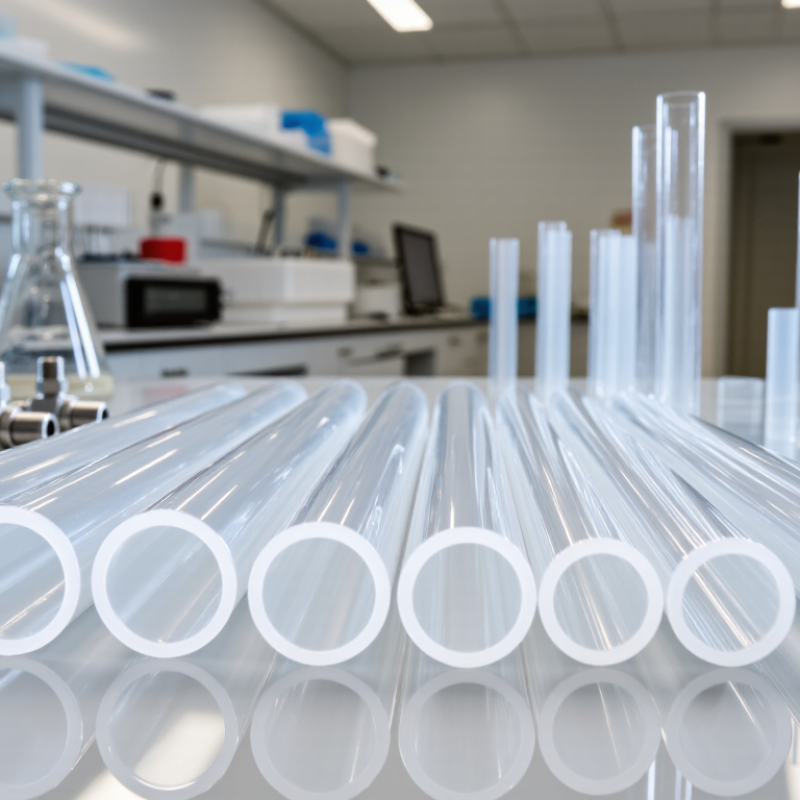
Define “Odorless”: Control Volatiles, VOCs, and Sensory-Test Results
“Odorless” should not mean “the tube smells fine today.” It should describe controlled emissions, repeatable testing, and acceptable sensory results. Silicone can release cyclic siloxanes, processing residues, and other volatile compounds after extrusion. A low total value does not always mean neutral odor. That assumption is risky.
Request headspace GC-MS results from a defined production lot. ISO 16000-6:2021 provides a recognized method for measuring airborne VOCs. Ask for compound-level results, not only “total VOC.” The test report should state temperature, conditioning time, sample mass, and detection limits. These details matter. Without them, two suppliers can report different numbers honestly.
Sensory testing adds practical evidence. ASTM E544-22 describes procedures for comparing odor intensity with reference scales. Use trained assessors, controlled rooms, blinded samples, and a fixed evaluation time. The WHO indoor-air guideline sets formaldehyde at 0.1 mg/m³ for a 30-minute average, although this value is not a silicone-tube specification. It shows why trace emissions deserve attention. For medical, food-contact, or sensitive indoor applications, combine VOC screening with extractables testing and sensory review. A tube may pass chemical limits yet feel unpleasant when warmed. I would also test aged samples, not just fresh ones. Real use is rarely perfect.
Compare Cure Systems: Platinum-Cured Silicone Reduces Residual Byproducts
How to Choose the Best Odorless Silicone Tube?
Odor often begins with the curing system, not the silicone itself. Platinum-cured silicone uses an addition reaction with fewer residual byproducts. This can reduce sulfur-like smells and unwanted volatile compounds after processing. Peroxide-cured tubing may leave decomposition residues if post-curing is incomplete. In practical production, I check the tube immediately after opening the package. Then I test it again after heating and rinsing. A faint odor can appear only under those conditions. This detail is easy to miss.
Platinum curing is useful for fluid transfer, laboratory equipment, and sensitive assemblies. It can provide a cleaner internal surface and more consistent contact with fluids. However, “odorless” should not mean “zero extractables.” Material purity, pigments, storage, and processing temperature still matter. Ask for cure-system information, extraction data, and lot-based inspection records. If the supplier provides only a general odor statement, pause before choosing. I have found that simple claims often need deeper verification.
Tips: Smell the tube after cutting, not only before use. Check whether heating changes its odor. Review wall thickness and surface smoothness under bright light. Request a sample for your real cleaning process. Test flexibility after repeated bending. Also, confirm that the tubing suits your temperature and pressure range. Platinum-cured material usually costs more, but the cleaner result may justify it. Sometimes, however, another issue is mistaken for curing residue. Packaging, adhesive labels, or nearby materials can also create odor.
Verify Safety: FDA 21 CFR 177.2600 and USP Class VI Compliance
How to Choose the Best Odorless Silicone Tube?
Odorless silicone is not automatically safe. A neutral smell only indicates low detectable odor. It does not prove clean formulation or biological suitability. In practical purchasing, request a current compliance statement for FDA 21 CFR 177.2600. This regulation addresses rubber articles intended for repeated food contact. The document should identify the exact silicone formulation, curing method, and intended use. A generic certificate may be insufficient.
USP Class VI compliance is equally important for medical and laboratory applications. It evaluates biological response through controlled testing, including irritation and systemic toxicity concerns. Ask for the test report, not only a sales claim. Check the tested material, wall thickness, temperature range, and production lot. These details matter. A tube tested at room temperature may not suit steam exposure or repeated heating. Review extraction data, sterilization limits, and traceability records. Also inspect the tube yourself. Look for particles, uneven walls, surface tackiness, or trapped air lines. Small flaws can affect flow and cleaning.
One point deserves caution. FDA 21 CFR 177.2600 and USP Class VI are not interchangeable approvals. They address different risk conditions. I would compare the certificate with the actual application before ordering. That step can feel slow, but it prevents expensive assumptions. Compliance language is easy to skim. Evidence is harder to replace.
Specify Hardness: Shore A 30–80 for Flexibility and Crush Resistance
How to Choose the Best Odorless Silicone Tube?
Specify hardness before discussing appearance. Shore A 30–80 covers most practical tubing needs, from soft bending to stronger crush resistance.
A Shore A 30 tube feels flexible in the hand and suits tight routing around small fittings. However, it can flatten under vacuum or repeated clamping. Shore A 50–60 offers a useful middle ground for fluid transfer and controlled bending. Shore A 70–80 resists compression better, but it may kink when forced around a sharp corner.
Hardness is not the whole specification.
I have seen tubes with identical Shore ratings behave differently because of wall thickness, temperature, and curing quality. ASTM D2240 and ISO 7619-1 define durometer testing, yet their results do not predict every service condition.
Test samples at the expected temperature. Silicone commonly becomes less compliant in cold environments, while heat can accelerate deformation under constant load.
The 2024 Grand View Research silicone market report places global demand at more than 18 billion US dollars, reflecting broad industrial use, but market growth does not guarantee suitable tube selection.
Ask for batch hardness data, dimensional tolerances, and odor testing records. A small sample test is wiser than trusting a catalogue number.
Maybe Shore A 60 is ideal. Maybe not. The application decides.