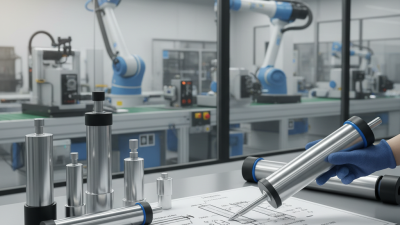
Top Air Cylinder Types for Global Buyers

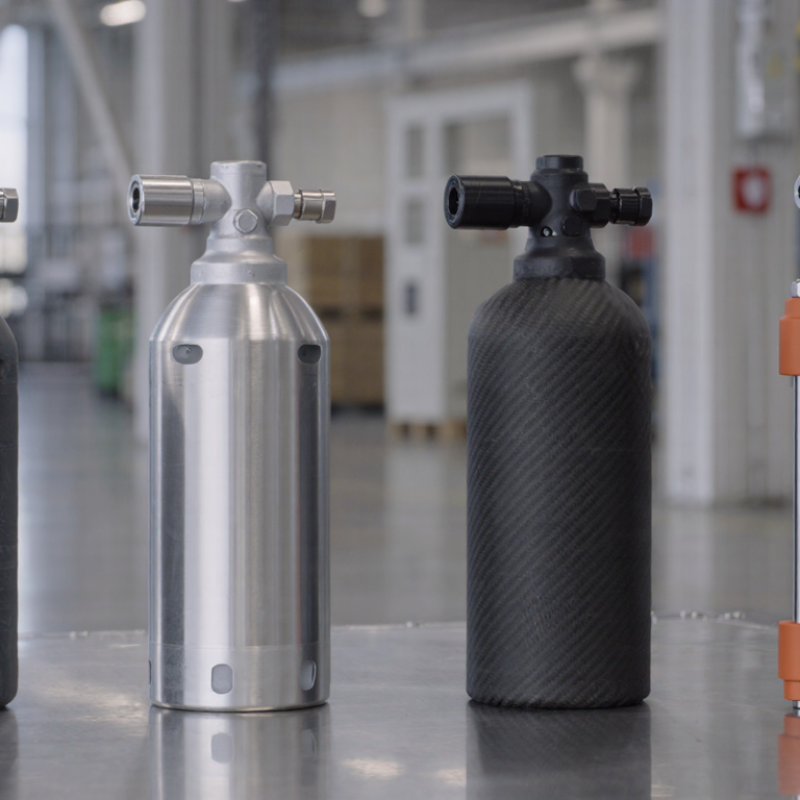
Choosing the right air cylinder begins with understanding its working environment, not simply comparing prices. Global buyers face different requirements in factories, hospitals, laboratories, diving operations, and emergency-response equipment. A lightweight aluminum cylinder may suit short-duration breathing applications. A carbon-fiber composite cylinder can reduce carrying weight during extended use. Steel remains practical where durability and cost control matter.

Industry data confirms a broad demand base. Grand View Research valued the global compressed air market at approximately USD 36.7 billion in 2023. It projects continued growth through 2030, supported by manufacturing, healthcare, energy, and transportation. The report does not isolate every air cylinder category. That limitation matters. Buyers should avoid treating general market growth as proof that one cylinder type fits every application.

Selection requires evidence. ISO 11119 standards guide the design and testing of composite gas cylinders, while ISO 9809 covers many refillable seamless steel cylinders. In North American markets, DOT requirements and applicable Transport Canada rules may also influence certification and transport. Always verify the marking.

A cylinder is more than a metal container. Wall thickness, valve compatibility, working pressure, burst pressure, tare weight, and inspection intervals affect real performance. A 6.8-liter carbon-fiber cylinder may feel manageable on a responder’s back, but its valve and regulator still need careful matching. Small details matter.

There is no universal winner.

This guide compares steel, aluminum, composite, and specialized air cylinder designs for global buyers. It focuses on practical trade-offs, documented standards, supplier reliability, and service conditions. Some recommendations remain conditional. That is honest, because temperature, filling infrastructure, maintenance quality, and local certification can change the final decision.
Top Air Cylinder Types for Global Buyers

Air Cylinder Basics: Structure, Operation, and Key Applications

Top Air Cylinder Types for Global Buyers

Air Cylinder Basics: Structure, Operation, and Key Applications

Air cylinders convert compressed air into controlled linear motion. A typical assembly contains a barrel, piston, piston rod, seals, end caps, and air ports. Seals control leakage between moving parts. The rod transfers force to a gripper, slide, valve, or lifting mechanism.

Single-acting cylinders use air in one direction and a spring for return movement. They suit simple clamping, stamping, and light ejecting tasks. Double-acting cylinders use air on both sides of the piston. They provide stronger control for pressing, sorting, and repeated positioning. Rodless cylinders save space when a long stroke is required. Guided cylinders reduce twisting during side-loaded movement. Selection depends on load, stroke, speed, mounting space, and working environment.

During operation, pressure enters one chamber and pushes the piston. Air exits through the opposite port. Flow controls adjust speed, while valves determine movement direction. A filter and regulator help protect seals and maintain stable force. In dusty factories, poor air preparation can shorten service life quickly. Packaging lines often use compact cylinders for pushing cartons. Assembly equipment may need guided designs for accurate travel. Material handling systems usually require stronger rods and carefully calculated loads. Still, a neat specification sheet can mislead. Real friction, uneven mounting, and pressure loss often change performance. Buyers should test the cylinder under actual duty cycles, not only laboratory conditions. A practical inspection should check noise, leakage, rod wear, and end-position impact. No cylinder selection is perfect. That limitation matters.

Top Air Cylinder Types for Global Buyers

Air cylinders convert compressed-air energy into linear or rotary motion. The chart compares representative operating-pressure ranges commonly specified for major industrial cylinder types. Actual limits depend on design, seals, temperature, load, and manufacturer specifications.

How they work: Compressed air enters a cylinder chamber and pushes a piston. The piston rod transfers force to the load, while directional valves control extension and retraction. Rodless and rotary designs provide motion where installation space or angular movement is important.

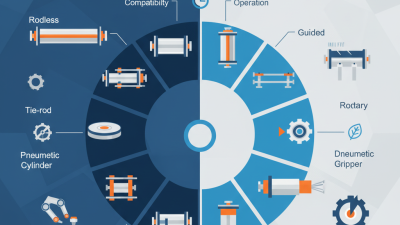
Pneumatic Cylinder Types by Motion, Design, and Actuation Method

Top Air Cylinder Types for Global Buyers

Pneumatic Cylinder Types by Motion, Design, and Actuation Method

Air cylinders convert compressed air into controlled mechanical motion. Linear cylinders move loads along a straight path, making them suitable for clamping, pushing, lifting, and positioning. Rotary air actuators create angular movement for turning parts or opening valves. Rodless cylinders save space when a long stroke is required, especially beside conveyors or inspection stations.

Design affects stability and service life. Standard rod cylinders suit general automation, while guided cylinders resist side loads during repeated movement. Compact cylinders fit shallow machine frames, but their shorter bodies can limit stroke length. Single-acting cylinders use air in one direction and a spring for return. Double-acting models use air for both strokes and offer better control over speed and force. In dusty workshops, seal quality and protection deserve careful attention.

Tips: Match bore size to the actual load, not a rough estimate. Check pressure loss through hoses, valves, and fittings. Leave a safety margin for friction and uneven loads. A technically correct cylinder may still perform poorly if alignment is ignored. This is an easy mistake. Test the expected cycle rate under real temperature conditions. Also, confirm mounting space before ordering; catalog dimensions can hide access problems around ports and fasteners.

Top Air Cylinder Types for Global Buyers - Pneumatic Cylinder Types by Motion, Design, and Actuation Method

Cylinder Type Primary Motion Basic Design Actuation Method Typical Bore Range Typical Stroke Range Typical Operating Pressure Common Applications Main Selection Consideration
Single-Acting Cylinder Linear, one powered direction One air port with a return spring or external return load Compressed air for extension or retraction; spring returns the piston 8–100 mm 10–100 mm 2–8 bar Clamping, ejecting, sorting, light-duty pressing The spring reduces available force and limits usable stroke.
Double-Acting Cylinder Linear, powered in both directions Two air ports supply opposing sides of the piston Compressed air controls extension and retraction 12–320 mm 25–2,000 mm 2–10 bar Material handling, automation, gates, fixtures Select bore size from required force and account for reduced rod-side force.
Compact Cylinder Short linear movement Short-body construction with reduced overall length Usually double-acting; single-acting versions are also available 12–100 mm 5–100 mm 1.5–8 bar Small assembly machines, clamping, pick-and-place units Ideal where installation space is limited, but long strokes are unsuitable.
Guided Cylinder Linear with controlled anti-rotation Piston rod combined with guide rods, guide plates, or slide bearings Generally double-acting pneumatic operation 12–125 mm 10–500 mm 2–8 bar Transfer units, lifting, pressing, side-load handling Choose guide capacity according to external moment and side load.
Rodless Cylinder Long linear movement A carriage moves along the cylinder barrel instead of using an external piston rod Double-acting compressed-air piston 16–100 mm 100–5,700 mm 2–8 bar Long transfers, packaging, door movement, linear positioning Check carriage load, bending moment, sealing method, and required guidance.
Tandem Cylinder Linear with increased thrust Two piston chambers arranged in line and connected to act together Double-acting pneumatic control 32–100 mm per chamber 25–500 mm 2–8 bar High-force clamping, pressing, lifting, compact machinery Provides greater force without doubling the cylinder bore, but increases length.
Telescopic Cylinder Long linear extension from a short retracted length Multiple nested stages extend sequentially Single-acting or double-acting pneumatic designs 40–200 mm initial stage 200–2,000 mm 2–8 bar Space-restricted lifting, tipping, positioning mechanisms Force and stability vary by stage; the smallest stage usually governs capacity.
Rotary Air Actuator Angular rotation Rack-and-pinion, vane, or helical mechanism converts air pressure into torque Double-acting or single-acting pneumatic operation Typically specified by torque rather than bore 90°, 180°, or adjustable angles up to 360° 2–8 bar Valve operation, part turning, indexing, tool orientation Match output torque, rotation angle, inertia, and required stopping accuracy.
Diaphragm Cylinder Short linear movement Flexible diaphragm separates the air chamber from the moving output element Usually single-acting with spring or external return 50–300 mm effective diameter 10–75 mm 1–7 bar Low-friction clamping, valves, light pressing, control mechanisms Low friction and sealing wear are advantages, but stroke and temperature limits apply.
Impact Cylinder High-speed linear impact Stores pneumatic energy and releases it rapidly for a short impact stroke Special pneumatic sequencing and fast exhaust control 32–125 mm 25–150 mm 4–8 bar Marking, riveting, punching, staking, light forming Verify impact energy, cycle rate, cushioning, and machine-frame rigidity.

Note: Operating ranges are representative engineering values for general industrial pneumatic cylinders. Actual specifications depend on construction standard, seal material, temperature, mounting arrangement, load, speed, and manufacturer design.

Comparing Single-Acting, Double-Acting, and Specialized Cylinders

Top Air Cylinder Types for Global Buyers

Pneumatic cylinders remain common in factory automation, packaging, and material handling. Grand View Research projects the pneumatic cylinder market to grow at roughly 4.8% annually through 2030. MarketsandMarkets also identifies automation and handling equipment as major demand areas. These figures suggest steady demand, but selection still depends on the machine’s actual duty cycle.

Single-acting cylinders use air for one stroke and a spring for return. They suit clamps, stops, and light indexing tasks. Their air consumption can be lower, especially in short cycles. However, spring force changes with stroke length and may reduce usable output. Keep the load modest.

Double-acting cylinders use air for both directions. They provide better force control, repeatability, and adjustable speed. They fit pushing, lifting, and positioning applications. Yet they consume air on both strokes and need careful cushioning at higher speeds.

Specialized cylinders solve tighter installation problems. Rodless designs save space along long travel paths. Guided cylinders resist rotation and side loading. Compact versions fit shallow machine frames. ISO 15552 and ISO 6432 dimensions can simplify international sourcing, but mounting details still vary between suppliers. This is where buyers often make mistakes. A spreadsheet may show matching bore and stroke, while the actual seal material, temperature range, or side load remains unsuitable. Field testing under real pressure, load, and cycle conditions is worth the extra effort.

Selecting Cylinder Materials, Sizes, Forces, and Performance Ratings

Top Air Cylinder Types for Global Buyers

Selecting an air cylinder starts with the environment, not the catalog photograph. Aluminum suits general factory automation because it is light and corrosion resistant. Stainless steel is safer around washdown areas, humidity, and mild chemical exposure. Steel handles demanding loads, but its added weight can affect moving equipment. I have seen underspecified cylinders bend mounting brackets before failing internally. That mistake is expensive.

Bore size determines theoretical force: F = P × A. At 6 bar, a 50 mm bore produces roughly 1,178 N before friction and pressure losses. Allow a practical margin of 10–20%, especially for horizontal motion or frequent starts.

Stroke should match the real travel, not the maximum available space. ISO 15552 and ISO 6432 dimensions can simplify international replacement planning. Check mounting threads and port sizes carefully.

Performance ratings need equal attention. Confirm operating pressure, temperature range, cushioning, speed, seal compatibility, and expected cycles.

The U.S. Department of Energy identifies compressed-air leaks as a major efficiency problem, while Compressed Air Challenge guidance reports typical leakage can waste 20–30% of compressor output. A cylinder with poor seals may consume more air than expected. That deserves testing.

Use pressure-drop measurements, cycle counts, and leak surveys instead of relying only on nominal force. Performance claims can look precise, yet real installations remain imperfect.

Global Buyer Checklist: Standards, Suppliers, Costs, and Maintenance

Global buyers should treat air cylinders as system components, not isolated catalog items. A cylinder that fits mechanically may still fail under heat, side loads, or contaminated air. Start with standards. ISO 15552 covers common tie-rod cylinder dimensions, while ISO 6432 addresses smaller round cylinders. ISO 4414 provides pneumatic safety principles. Ask suppliers for dimensional drawings, material declarations, pressure-test records, and traceable inspection documents. Not glamorous. It prevents expensive surprises.

For pricing, compare total ownership cost rather than unit price. Include fittings, sensors, shipping, customs, spare seals, installation labor, and expected service life. The U.S. Department of Energy’s Improving Compressed Air System Performance sourcebook states that leaks can waste 20–30% of compressor output in poorly maintained systems. That loss increases every cylinder’s operating cost. Request flow-consumption data at your actual pressure and cycle rate. A neat spreadsheet can mislead when duty cycles are guessed.

Maintenance planning should specify filtration, lubrication requirements, rod alignment, cushion adjustment, and inspection intervals. The supplier should explain seal compatibility with temperature, moisture, and cleaning chemicals. Keep replacement kits locally when downtime is costly. Track stroke count and leakage trends, not only visible damage. My practical concern is simple: many buyers over-specify bore size but under-check side loading. That choice raises air consumption and mounting stress. It is worth reviewing the calculation with an independent pneumatic engineer before approval.

Scroll to Top