2026 Best Pneumatic Air Cylinder Types for Global Buyers

Choosing the right pneumatic air cylinder can determine whether a machine runs smoothly or develops costly stoppages. Global buyers must compare cylinder types, not simply purchase the lowest-priced model. A compact cylinder may fit a packaging line, while a guided or rodless cylinder may suit longer travel. Double-acting designs deliver controlled movement in both directions. Single-acting designs can simplify smaller mechanisms.

Peter Rohner, author of Pneumatic Control for Industrial Automation, offers a useful engineering principle: “The quality of motion depends on the quality of control.” That idea remains practical. A cylinder’s performance depends on clean compressed air, correct alignment, suitable seals, and properly sized valves. Small details matter. A misaligned rod can leave visible wear marks within weeks.

This 2026 guide examines the best pneumatic air cylinder types for global buyers. It considers ISO dimensions, operating pressure, stroke length, mounting options, corrosion resistance, sensor compatibility, and expected service life. Regional conditions also deserve attention. Humid factories may require stainless-steel components or improved protection. Cold environments can affect seals and response speed.

There is no universal winner. That is the inconvenient part. The most advanced cylinder may be unnecessary for a simple clamp, while a basic model may fail under repeated side loading. Buyers should evaluate the complete motion system, including air preparation and maintenance access. Product catalogs help, but real operating data is better. A careful selection process prevents expensive assumptions.
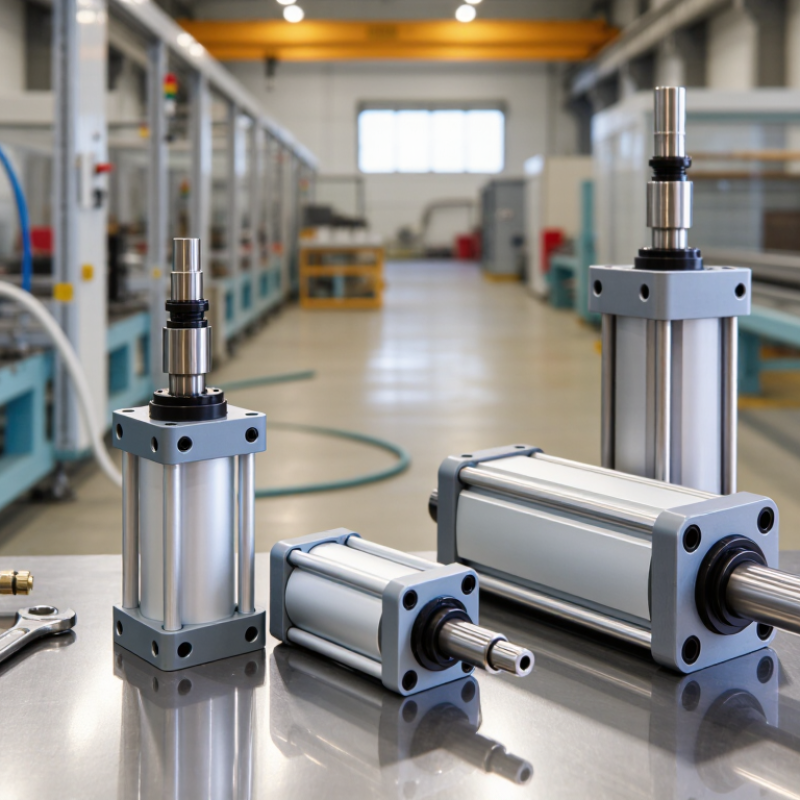
2026 Best Pneumatic Air Cylinder Types for Global Buyers

Pneumatic Air Cylinders: Definition, Structure, and Working Principles

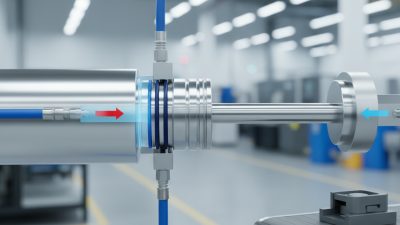
A pneumatic air cylinder is a mechanical actuator powered by compressed air. It converts air pressure into controlled linear movement. Compressed air enters one chamber and pushes a piston. The piston moves along the barrel, driving a connected rod. This motion can extend, retract, lift, clamp, or position equipment. Pneumatic cylinders are valued for simple construction, quick response, and clean operation. However, their performance depends heavily on air quality and correct sizing.

A typical cylinder contains a barrel, piston, piston rod, seals, end caps, and air ports. The piston separates two chambers inside the barrel. A directional valve sends air into one chamber while releasing air from the other. Pressure then creates movement in the required direction. Seals reduce leakage and maintain force. Rod alignment also matters. A slightly misaligned rod may cause wear, vibration, or uneven travel. This detail is easy to overlook in practical installations.

Tips: Check operating pressure, stroke length, load weight, and mounting space before selection. Use filtered and regulated air. Inspect seals regularly, especially in dusty areas. Cushioning can reduce impact near the stroke ends. Do not assume a larger cylinder always performs better. Oversizing may waste air and slow the system. Real equipment often behaves differently from a catalog example.

Main Types of Pneumatic Air Cylinders and Their Operating Features

2026 Best Pneumatic Air Cylinder Types for Global Buyers

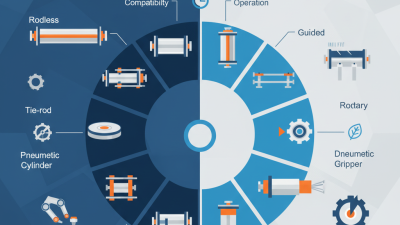
Pneumatic air cylinders convert compressed air into linear motion, but their operating behavior differs sharply by design.

Single-acting cylinders use air for one stroke and a spring for return. They suit clamps, stops, and light pushing tasks. Their spring reduces available force and can limit stroke length. Double-acting cylinders use air on both sides of the piston. This allows controlled extension and retraction, with better force consistency. They remain the practical choice for frequent cycling.

Not always.

Rodless cylinders move a carriage along the barrel, saving space where a projecting rod would interfere. They work well for long travel, yet side loads require careful guidance.

Guided cylinders add external rails or guide rods for better resistance to twisting. Compact cylinders fit shallow machine frames, although their short bodies can restrict stroke and cushioning options.

Rotary pneumatic actuators convert air pressure into angular motion. They suit indexing, turning, and valve operation rather than straight pushing. Check actual torque at working pressure, not the catalog maximum.

From field selection work, cushioning, seal quality, and mounting alignment often matter more than headline force. Adjustable cushions reduce end-of-stroke shock and noise. Magnetic pistons support position sensing, but sensor performance depends on installation and electrical compatibility.

Stainless or protected surfaces may help in humid environments, while ordinary finishes can perform well in clean, dry air. Buyers should compare bore, stroke, pressure, speed, load, and duty cycle.

I have seen oversized cylinders waste air and slow a machine. A smaller unit can fail early. Test the real load. Leave room for imperfect assumptions.

How to Select the Right Air Cylinder for Different Industrial Uses

2026 Best Pneumatic Air Cylinder Types for Global Buyers

Choosing the right pneumatic air cylinder starts with the task, not the catalog photo. A compact single-acting cylinder suits short, return-assisted movements, such as clamping a small fixture. Double-acting cylinders provide controlled extension and retraction for gates, slides, and pick-and-place systems. For limited spaces, rodless designs save installation depth, but they need careful guidance against side loads. Tie-rod and compact cylinders are common choices, yet their mounting space and service access differ. For global projects, verify port, thread, and mounting standards before shipment.

Match bore size to required force at the available pressure, then add a sensible safety margin. Calculate from real load data. Stroke length should reflect the complete movement, including clearance at both ends. Adjustable cushioning helps slow a heavy piston before impact, especially on fast packaging lines. Use corrosion-resistant construction near washdown areas, moisture, or aggressive dust. Temperature also matters. Seal materials can harden unexpectedly in cold rooms or degrade beside hot equipment. A common mistake is choosing by bore alone; alignment, cycle rate, and air quality often decide reliability. Small misalignment can create loud knocks and early seal wear. It is easy to overlook.

Tips:

Record pressure, load, stroke, cycle frequency, and mounting direction before ordering. Ask for test data when the cylinder will run continuously or lift an uneven load. Keep the design practical: a larger cylinder is not automatically better. Oversizing increases air use and may make motion harsh. Leave room for inspection. If uncertainty remains, prototype the movement with the intended valve, tubing, and regulator. That trial may expose a problem the specification sheet misses.

Key Performance Standards for Global Buyers to Compare

2026 Best Pneumatic Air Cylinder Types for Global Buyers

Global buyers should compare pneumatic cylinders by measurable performance, not appearance. ISO 15552 and ISO 6432 define key dimensional requirements for common cylinder families. These standards simplify replacement planning across different markets. A 2024 Grand View Research report estimates the pneumatic cylinder market at approximately USD 1.5 billion in 2023, with steady growth expected through 2030. That growth increases product choice, but also creates inconsistent specification quality.

Check bore size, stroke length, operating pressure, speed, cushioning, and allowable side load. The basic force calculation is simple: force equals pressure multiplied by piston area. However, friction and pressure loss reduce real output. ISO 4414 highlights safety principles for pneumatic systems, including controlled energy release and reliable installation. For demanding applications, request cycle-life evidence, leakage limits, temperature ranges, and test conditions. A polished datasheet can still hide weak testing.

Tips: Compare the same pressure basis. Confirm whether force figures are theoretical or tested. Ask for dimensional drawings before ordering. A small mounting error can cause uneven wear. Review seals carefully for heat, moisture, and cleaning exposure. No cylinder fits every line. Global comparison also requires local spare-part access, documentation quality, and shipment protection. One overlooked detail is maintenance space; technicians need room around ports and cushions. That point is easy to miss during initial design.

2026 Best Pneumatic Air Cylinder Types for Global Buyers - Key Performance Standards for Global Buyers to Compare

Cylinder Type Relevant International Standard Typical Bore Range Typical Stroke Range Key Performance Characteristics Best-Fit Applications Global Buying Considerations
Standard Profile Cylinder ISO 15552 32–320 mm Commonly 25–2,000 mm; verify configuration Strong general-purpose design, standardized mounting dimensions, optional cushioning and magnetic piston sensing Material handling, packaging, assembly lines, machine automation Confirm ISO mounting dimensions, rod-end thread, cushion adjustment, seal material and sensor compatibility
Compact Cylinder ISO 21287 20–100 mm Typically 5–500 mm Short installation length, low mass, suitable for moderate loads and limited machine space Clamping, ejecting, indexing, small transfer mechanisms Check available mounting accessories and whether the required stroke is compatible with the compact body length
Round-Line Cylinder ISO 6432 8–63 mm Typically 10–1,000 mm Slim cylindrical body, simple construction, low-to-medium force capability and easy installation Light-duty automation, sorting, small gates, laboratory and general equipment Verify bore, stroke, mounting thread, operating pressure and corrosion resistance for the environment
Miniature Cylinder Often based on ISO 6432 dimensions; supplier-specific variants are common 6–25 mm Typically 5–300 mm Very small footprint, low air consumption and fast response when correctly sized Compact pick-and-place units, sensors, small fixtures and testing equipment Dimensional interchangeability is less universal; request detailed drawings and thread specifications before purchase
Guided Cylinder Cylinder body may follow ISO 15552 or ISO 21287; guide dimensions are often application-specific Typically 20–100 mm Typically 25–500 mm Resists rotation and side loads better than a standard rod cylinder; improves positioning stability Grippers, pressing, lifting, pushing and transfer systems with offset loads Compare guide type, allowable moment load, deflection, lubrication requirements and end-stop shock absorption
Rodless Cylinder ISO 16004 for selected mechanically coupled rodless cylinders; product design must be verified Typically 16–100 mm Commonly 100–6,000 mm; long strokes require specific design review Long travel in a compact envelope, no projecting piston rod and efficient use of installation space Linear transfer, opening systems, conveyor positioning and multi-axis automation Evaluate leakage protection, load guidance, moment capacity, mounting alignment and stroke-end cushioning
Rotary Actuator No single universal dimensional standard covers all designs; interface and torque data must be specified Not normally rated by bore alone Angular rotation commonly 90°, 180° or adjustable Converts compressed-air energy into controlled angular motion; torque depends on pressure, bore and mechanism Valve operation, turning, diverting, indexing and compact handling systems Compare torque at the actual working pressure, rotation range, end-position adjustment and shaft/interface dimensions
Stainless-Steel Cylinder May be designed to ISO 6432, ISO 15552 or another applicable dimensional standard Typically 20–100 mm Typically 25–1,000 mm Improved resistance to moisture, washdown and many corrosive environments Food processing, packaging, chemical handling and outdoor equipment Confirm stainless grade, surface finish, ingress protection, food-contact suitability and seal compatibility
High-Temperature Cylinder Dimensional standard depends on the base cylinder design; temperature rating is product-specific Typically 32–100 mm Typically 25–1,000 mm Uses temperature-resistant seals and materials; performance depends strongly on temperature and duty cycle Ovens, heat-treatment equipment, foundry machinery and hot-process automation Specify continuous and peak temperature, seal compound, lubrication method, speed and expected service life
Comparison note: Bore and stroke ranges shown above are typical market ranges rather than universal limits. Actual performance depends on operating pressure, load direction, speed, cushioning, mounting, air quality and duty cycle. For international procurement, verify the current technical drawing, applicable ISO standard, thread system, port size, seal material and required conformity documentation.

Installation, Maintenance, Safety, and International Sourcing Factors

2026 Best Pneumatic Air Cylinder Types for Global Buyers

Choosing a cylinder starts with the motion, not the catalog photograph.

ISO 15552 profile cylinders suit standard factory automation and offer interchangeable mounting dimensions.

Compact ISO 21287 cylinders save space but usually provide shorter travel.

Rodless designs can handle long strokes where a projecting rod creates hazards.

A recurring field lesson is simple: undersized cylinders consume air and fail early. Confirm force, stroke, speed, load direction, and operating temperature before ordering.

Installation quality affects service life.

Align the rod carefully, support heavy loads, and prevent side loading.

Use clean, dry air and install filtration near the actuator.

ISO 4414 requires pneumatic systems to address pressure control and safe energy release.

The U.S. Department of Energy reports that compressed-air leaks can waste 20–30% of compressor output.

That waste often begins with loose fittings.

Check connections with ultrasonic equipment or approved leak-detection methods.

Small leaks become expensive.

Safety must remain practical.

OSHA reports that hazardous-energy incidents cause about 120 workplace fatalities and 50,000 injuries annually in the United States.

Lockout procedures should isolate air, exhaust stored pressure, and verify zero movement.

For international sourcing, request ISO test data, material declarations, dimensional drawings, spare-seal details, and traceable batch records.

Confirm thread standards, port sizes, customs descriptions, and local conformity requirements.

One overlooked issue remains language: translated warnings can be incomplete.

Review them with the installation team before shipment.

Scroll to Top